
Urgent safety check for 85,000 tumble dryers at risk of fire. Affected brands include: Candy, Baumatic, Caple, Haier, Hoover, Lamona, Iberna, Montpellier. ⚠️ Check yours now. 👉 It takes just a few minutes to check if yours is affected. Find your model and serial number, and either check online or contact the manufacturer. If you own one of the affected models, you should STOP using it immediately and unplug the appliance https://www.gov.uk/government/news/urgent-safety-check-for-85000-tumble-dryers
Author Archives: whitegoodsnow
Whirlpool Invests R$3 Million in Advanced Training Hub in Brazil
Whirlpool is investing R$3 million in a new advanced manufacturing training center at its Rio Claro plant in São Paulo, where it produces washers, stoves, ovens, and cooktops.
The “Factory of the Future” aims to deliver 6,000 hours of annual training through 2030 for employees and students from São Paulo State’s technical colleges (Fatecs), with the goal of boosting local manufacturing productivity by 50%.
Whirlpool employs 12,000 people in Brazil, including 3,000 in Rio Claro, and operates additional plants in Manaus and Joinville. Over the past five years, the company has invested R$1.3 billion in Brazil and $4 billion globally in R&D and capital expenditures. Currently, 97% of its products sold in Brazil are manufactured locally.
Middleby to Sell 51% Stake in Residential Kitchen Business to 26North in Transaction Valuing the Business at $885 Million
The Middleby Corporation (NASDAQ: MIDD) has agreed to sell a 51% stake in its Residential Kitchen business to affiliates of 26North Partners LP, valuing the unit at $885 million. Middleby will retain a 49% non-controlling interest in the new joint venture, receiving approximately $540 million in cash and a $135 million seller note.
The Residential Kitchen portfolio includes premium brands such as Viking, AGA Rangemaster, La Cornue, Kamado Joe, Marvel, Novy, and U-Line. This move, alongside the planned spin-off of Middleby’s Food Processing segment in H1 2026, advances the company’s strategy to become a pure-play commercial foodservice leader.
With a sharpened focus, Middleby is positioned for accelerated growth through innovation and automation, offering a robust lineup of commercial kitchen solutions that enhance labor efficiency, reduce food costs, and expand into high-potential markets like ice and beverage.
The commercial foodservice business stands strong with 2024 revenue of $2.38 billion, $654 million in Adjusted EBITDA, and a margin exceeding 27%
TCL to manufacturer in Bangladesh
TCL Global Marketing Company Limited has officially launched operations in Bangladesh, partnering with local tech leader DX Group to handle marketing, distribution, and manufacturing. The announcement was made at an event at Hotel Sheraton, Banani, where TCL shared its investment plans and commitment to building robust local production capabilities.The company plans to produce a range of products locally, including televisions, air conditioners, refrigerators, and washing machines,
Jensen North America Acquires G.A. Braun, Strengthening Its North American Presence
Jensen North America, a proud member of the global Jensen-Group, has officially acquired the business operations of G.A. Braun. This strategic acquisition represents a major leap forward in Jensen-Group’s long-term growth strategy, significantly enhancing its manufacturing capabilities, broadening its product offerings, and expanding its service network throughout North America.
By integrating G.A. Braun’s expertise and infrastructure, Jensen-Group is poised to deliver even greater value to customers across the region—reinforcing its commitment to innovation, quality, and customer-centric solutions in the industrial laundry sector.
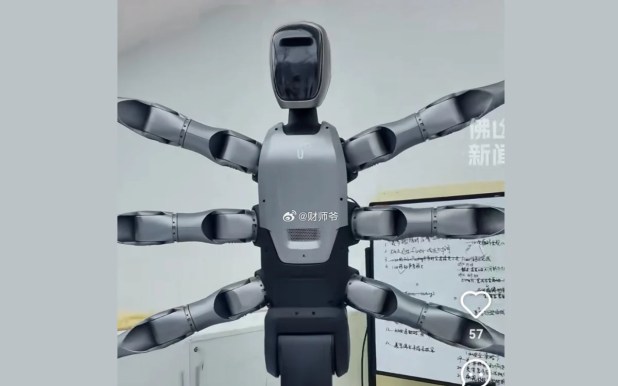
Midea Unveils Miro U: A Next-Gen Humanoid Robot Set to Revolutionize Smart Manufacturing
Midea is pushing the boundaries of industrial automation with the unveiling of Miro U, the third-generation model in its humanoid robot series. Confirmed by Wei Chang, Midea’s Vice President and CTO, Miro U represents a significant leap forward in robotics innovation—designed and developed entirely in-house by the company’s R&D team.
At the heart of Miro U’s capabilities are its six bionic mechanical arms, engineered for high-precision control and rapid end-effector switching. This modular design allows the robot to seamlessly adapt to a variety of tasks on the production line. It also boasts vertical lifting and 360-degree in-place rotation, giving it exceptional flexibility and range of motion in confined industrial environments.
Looking ahead, Midea plans to deploy Miro U at its high-end washing machine factory in Wuxi by the end of 2025. The robot is expected to deliver measurable gains in operational efficiency, including a 30% improvement in production line adjustment speed and enhanced takt time performance—a key metric in lean manufacturing.
With Miro U, Midea is not just automating tasks; it’s redefining the future of smart factories
Whirlpool’s India Unit Sale to Advent International Falls Through Over Valuation Dispute
In a significant turn of events in the global M&A landscape, talks between U.S. appliance giant Whirlpool Corporation and private equity powerhouse Advent International regarding the sale of Whirlpool’s India unit have reportedly collapsed. According to sources cited by Reuters, the deal—valued at up to $1 billion—was derailed due to disagreements over valuation.
Advent International had emerged as the leading contender to acquire a 31% stake in Whirlpool of India Ltd (NSE: WHIR.NS), a move that would have triggered a mandatory open offer for a controlling stake under Indian securities regulations. The acquisition was seen as a strategic play by Advent to deepen its footprint in the Indian consumer durables market, leveraging Whirlpool’s established brand presence and distribution network.
However, despite advanced negotiations, the two parties were unable to bridge the valuation gap. The breakdown underscores the challenges global investors face in aligning expectations with multinational corporations, especially in high-growth but price-sensitive markets like India.
Whirlpool of India, a subsidiary of Michigan-based Whirlpool Corp (NYSE: WHR), has been a prominent player in the Indian home appliance sector, known for its refrigerators, washing machines, and kitchen appliances. The potential divestment was part of Whirlpool’s broader strategy to streamline its global operations and focus on core markets.
While this deal may have faltered, industry watchers suggest that interest in India’s consumer appliance sector remains robust, driven by rising disposable incomes, urbanization, and a growing appetite for premium home solutions. It remains to be seen whether Whirlpool will seek other suitors or recalibrate its strategy for the Indian market.
Stay tuned for more updates as this story develops.
Asurion to Acquire Domestic & General in $2.74 Billion Deal
Asurion has announced a definitive agreement to acquire Domestic & General (D&G), one of the UK and Europe’s largest appliance care providers.
Founded over 100 years ago, Domestic & General has built a trusted reputation in appliance protection, supported by a repair network of approximately 25,000 independent engineers and a customer base of 6.8 million subscribers. Following the acquisition, D&G will continue operating under its own brand as a dedicated business unit within Asurion.
Latest Buzz in Europe’s Domestic Appliances Market: Sustainability, Smart Tech, and Steady Growth
As we wrap up 2025, the European domestic appliances market is humming with innovation and adaptation. From eco-friendly regulations shaking up dryer sales to Chinese giants planting roots in the heart of the continent, the industry is navigating economic headwinds while chasing greener, smarter horizons. At Whitegoods Now, we’re keeping our finger on the pulse of whitegoods and home tech—because whether you’re a retailer stocking shelves or a homeowner eyeing that next upgrade, these trends could redefine your shopping list. Let’s dive into the freshest news shaping the market.
Market Growth: A Steady Climb Amid Challenges
Europe’s household appliances sector is no stranger to resilience. Despite macroeconomic jitters like inflation and supply chain tweaks, forecasts paint a picture of consistent expansion. The market is projected to hit €115.8 billion in 2025, growing at a CAGR of 2.33% through 2033. Major appliances—like fridges, washers, and ovens—remain the heavy hitters, clocking in at a €60 billion volume this year, while the overall segment eyes a 4.10% annual bump through 2030.
Zooming in, the broader appliances landscape (including small gadgets) is valued at $222.69 billion for 2025, with a 4.83% CAGR pushing it to $324.68 billion by 2033. Western Europe’s outlook for 2026? A modest value growth, fueled by replacements and first-time buyers, though Chinese brands are ramping up with affordable, feature-packed options that nibble at legacy players’ share. Online sales are the real star here, snagging 38.9% of revenues and growing fastest—think 45% for small appliances in early 2025. If you’re browsing for a new dishwasher, e-commerce’s convenience is clearly winning.
Hot-Off-the-Press Developments: Mergers, Launches, and Regulations
2025 has been a year of bold moves. In April, Chinese powerhouse Midea snapped up Küppersbusch’s parent company, beefing up its premium footprint in Europe and pressuring German stalwarts like Bosch with sharp pricing and tech smarts. Fast-forward to June: Haier Europe teamed up with Hungary’s Klima Kft to launch an R&D hub in Budapest, signaling deeper Eastern European investments in innovation. This isn’t just about factories—it’s about tailoring smart home tech for local tastes.
On the product front, Electrolux AB dropped a smart laundry lineup in July 2024 (with ripples into 2025), featuring UltraQuick cycles that zap stains in under an hour—perfect for busy urbanites. But the big regulatory hammer? A July 2025 EU ban on sub-A-class vented and condenser dryers, steering shoppers toward energy-sipping heat-pump models. This could spike demand for efficient whites, saving households on bills while cutting emissions. Meanwhile, across the pond in logistics, a September China-Europe freight train milestone highlighted surging appliance exports to Russia, underscoring Europe’s reliance on Asian supply chains.
Trends to Watch: Green, Connected, and Compact
Sustainability isn’t a buzzword—it’s law and lifestyle. With EU mandates pushing A-class efficiency, expect more hybrid appliances blending energy savings with IoT smarts. Small appliances are exploding too, at a 5.5% CAGR through 2030, thanks to compact, multi-taskers for Europe’s rising single-person households (hello, air fryers and robot vacs). Smart ecosystems? They’re everywhere, from app-controlled ovens to voice-activated washers, with online channels amplifying their reach—27% of major appliance sales in H1 2025.
Value hunting is rife: Over 40% of Western European consumers switched to cheaper brands this year, prioritizing core perks like energy efficiency over flashy extras. Eastern Europe leads in e-commerce adoption (37% of major sales online), while trade-ins and rentals gain traction for big-ticket items. And don’t sleep on health-focused niches—post-pandemic, appliances with antimicrobial tech and air purification are trending.
What’s Next for Whitegoods Enthusiasts?
As 2026 looms, the market’s poised for smarter, greener evolution, but affordability will be king. Retailers, stock up on those heat-pump dryers; consumers, scout online deals for energy-efficient gems. At Whitegoods Now, we’re optimistic—Europe’s appliances scene is evolving to make homes more efficient and fun. Got thoughts on these shifts? Drop a comment below, or browse our latest reviews for the must-have models.
Stay plugged in—subscribe for weekly updates on whitegoods wonders!
Whirlpool Reshapes Global Footprint: Reduces Stake in India, Halts Production in Argentina
Whirlpool Corporation is recalibrating its international operations with two major moves in India and Argentina, signaling a shift in its global appliance strategy.
📉 Stake in Whirlpool India Drops to 40%
On November 27, Whirlpool Corporation announced it had reduced its ownership in Whirlpool of India Limited from 51% to approximately 40%. The change follows the sale of 14.26 million equity shares by its wholly owned subsidiary, Whirlpool Mauritius Limited, in an on-market transaction.
While Whirlpool retains a significant minority stake, the move suggests a strategic realignment in one of Asia’s fastest-growing appliance markets. Whirlpool India remains a key player in refrigeration, laundry, and kitchen appliances, with a strong retail and service network across the subcontinent.
🛑 Production Ceases at Argentina’s Pilar Laundry Plant
Just a day earlier, on November 26, Whirlpool Argentina announced it will cease manufacturing operations at its Pilar Laundry Plant. Opened in 2022 with a $52 million investment, the facility was designed to produce 300,000 high-capacity washing machines annually and aimed to become Argentina’s largest appliance exporter—primarily serving Latin American markets like Brazil.
Despite the shutdown, Whirlpool confirmed it will maintain its commercial and after-sales service operations in Argentina, ensuring continued availability of products, accessories, and spare parts. The company emphasized its long-standing presence in the country, where it has operated for over 35 years.
 WHITEGOODSNOW