
Panasonic is expanding its microwave line-up by bringing full air fryer functionality to its 27L Slimline combination models—eliminating the need for a separate air fryer.
The update follows the success of the brand’s 34L flagship combination microwave, which features a 36 cm turntable and can cook up to 900 g of chips in one go.
Each new Slimline model now offers four cooking functions in one:
Air Fry, Convection Oven, Grill, and Microwave.
A top-mounted fan circulates heat in a full 360° airflow, delivering crisp, even browning similar to a dedicated air fryer. Panasonic also claims impressive efficiency gains:
– Jacket potatoes cook up to 40% faster
– Whole chickens cook up to 36% faster
– Combination cooking cuts overall time by up to 70%
– Energy use drops by as much as 50% compared to a traditional oven
With these additions, Panasonic positions its Slimline range as a compact, all‑in‑one solution for faster, healthier cooking.
Author Archives: whitegoodsnow
Extending CBAM to Home Appliances: A Necessary Step for Fair Competition and Climate Integrity
The proposal to expand the EU’s Carbon Border Adjustment Mechanism (CBAM) to include washing machines, refrigerators, and dryers is both timely and essential.
More than 75% of large household appliances produced in Europe are sold within the EU. As a result, manufacturers are directly exposed to rising material and production costs driven by the Emissions Trading System (ETS).
With free ETS allowances being phased out, European producers will face increasing carbon costs—costs that imported finished goods can currently avoid. This widening “carbon gap” risks distorting the market and undermining Europe’s capacity to innovate.
Why extending CBAM matters
Bringing home appliances into the CBAM framework would:
– Level the playing field by ensuring imported goods face equivalent carbon costs
– Encourage global decarbonisation by rewarding low‑carbon manufacturing practices
– Safeguard EU climate ambition by preventing carbon leakage and reinforcing the ETS
To fully achieve CBAM’s objectives, we urge the European Parliament and the Council of the EU to extend coverage to additional home appliance categories that face similar carbon leakage risks.
A comprehensive approach is the only way to protect European industry while staying true to the EU’s climate commitments.
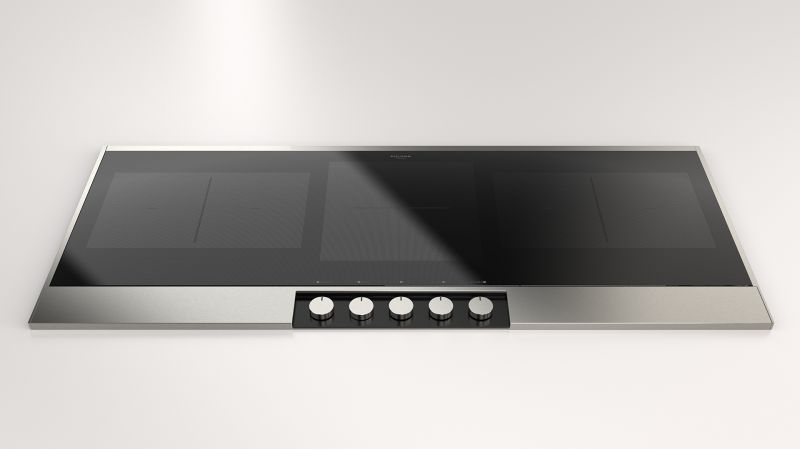
Fulgor Milano Unveils the Enova Hob Collection: Italian Craftsmanship Meets Modern Performance
Fulgor Milano has expanded its premium appliance lineup with the launch of the Enova Hob Collection, a series designed to elevate the modern cooking experience through a blend of innovation, precision, and unmistakable Italian style.
The new Enova range introduces advanced cooking technology, intuitive controls, and a sleek, contemporary aesthetic that integrates seamlessly into today’s kitchen designs. Built for home cooks who expect both performance and beauty, the collection delivers a refined balance of precision, efficiency, and craftsmanship.
With Enova, Fulgor Milano continues its commitment to creating appliances that not only perform at a professional level but also enhance the visual identity of the kitchen. The result is a hob collection that feels as sophisticated as it looks — engineered for those who value design as much as culinary capability
India Emerges as a Global Growth Engine for Appliance Giants
BSH Home Appliances Group, the company behind Bosch and Siemens appliances, has reported 7% growth in India for FY25, even as its global revenue dipped by around 1.6% year‑on‑year. The contrast is striking, and it underscores a clear trend: India is becoming a critical growth anchor for global white goods players.Dr. Matthias Metz, CEO of BSH, summed it up succinctly:
“BSH Home Appliances India is an extremely important market that demands separate focus.”
Samsung Confirmed as Italy’s Most Preferred Fridge and Washing Machine Brand for 2025
Samsung has once again been named Italy’s favourite brand for refrigerators and washing machines, according to the 2025 Ipsos Brand Attitude survey. The study, conducted in 30 countries, measures brand strength through indicators such as the Most Preferred metric — a spontaneous, single‑answer question asking consumers which brand they favour above all others.
Samsung has held the top spot in both categories since 2018.
“We have been the reference brand in the Refrigerator and Washing Machine categories since 2018,” said Daniele Grassi, Vice President & Head of Home Appliances at Samsung Italy. “Such a long‑lasting result shows that consumers are more than satisfied and recommend us to others.”
Grassi added that Samsung’s leadership reflects a shift among Italian consumers who now view appliances — with lifespans of 7–10 years — as long‑term investments, prioritising performance and quality over price alone.
Electrolux Group Appoints Joaquín García Sanchis as Global Design Coordinator
Electrolux Group has named Spanish designer Joaquín García Sanchis as the new global design coordinator for its key brands: Electrolux, AEG, and Frigidaire.
Sanchis joins the company from Italdesign Giugiaro, where he served as Head of Design and collaborated with major automotive brands including Renault, Ford, Skoda, and Seat—both directly and through his own design studio.
In his new role, Sanchis will oversee the creative direction and design alignment across Electrolux Group’s global portfolio. He will report to Elena Breda, Vice President of Product Strategy, Innovation, and Sustainability.
BSH Reports Stable 2025 Performance With Growth Across Most Regions
BSH Home Appliances Group closed the 2025 fiscal year with €15.0 billion in sales. Adjusted for currency effects, this reflects a slight 1.6% dip, though local‑currency growth reached 2.8%. The company saw positive momentum in North America, Europe, and Emerging Markets, while Greater China remained challenging.
Regional Highlights
North America delivered strong results, with over 5% growth in local currency and continued market‑share gains. Premium brands Gaggenau and Thermador, along with built‑in refrigeration and gas cooktops, drove performance. BSH also strengthened the Bosch brand and its overall competitiveness in the region.
In Europe, sales rose 1.2% despite ongoing price pressure. Built‑in appliances grew 4%, supported by solid demand in Germany, the UK, Spain, the Netherlands, and Italy.
The Emerging Markets region posted 2.3% growth—and an impressive 24% in local currency—across Turkey, Eastern Europe, the Middle East, India, and Africa. BSH also advanced its footprint with a new factory in Cairo. India will become an autonomous region in 2026 due to its scale and strategic importance.
Only Greater China declined, with sales down 7.1% amid persistent market weakness, though BSH maintained its leading position among non‑Chinese manufacturers.
Product Category Trends
Most categories showed resilience in 2025:
– Cooking appliances returned to growth: ovens up 2.0%, hobs and extractor hoods up 2.6%, with rising demand for hobs with integrated ventilation.
– Dishwashers grew 2.1%.
– Small appliances held steady at +0.1%.
– Customer Service revenue edged up 0.3%, reinforcing BSH’s focus on product longevity and customer satisfaction.
Cooling (–4.0%) and laundry (–1.0%) declined, largely due to intense competition in Greater China.
Currys announced the departure of its chief executive
More than £160m was wiped off the value of Currys after the electrical goods giant announced the departure of its chief executive
Alex Baldock will leave after eight years running the retailer, having spearheaded a successful turnaround and fended off two takeover attempts from foreign suitors.
Confirmation of his exit led to shares in Currys falling by more than 11pc on Thursday, the biggest drop in two years.
Sabaf Group Reports Solid 2025 Results Amid Deep Sadness for the Loss of CEO Pietro Iotti
Sabaf Group has released its 2025 financial results, but this year’s numbers arrive under the shadow of profound loss. The sudden passing of CEO Pietro Iotti has left the entire organisation grieving, with emotions far outweighing the satisfaction of a positive—though complex—financial performance.
A Year of Stability and Selective Growth
Despite a challenging macroeconomic environment, Sabaf closed 2025 with revenues up 0.8%, reaching €279 million. Profitability also showed resilience:
– EBITDA rose 2.4% to €41 million, representing nearly 15% of total revenues.
– Net profit, however, declined from €16 million to €13 million, reflecting higher costs and a more cautious market.
Even with the dip in net profit, the Board of Directors expressed confidence in the company’s financial health. They intend to maintain the dividend at €0.58 per share, a signal of stability to shareholders and stakeholders alike.
Leadership Transition During a Difficult Moment
In the wake of Iotti’s passing, Sabaf has moved swiftly to ensure continuity and steady governance.
– Gianluca Beschi, previously Chief Financial Officer, will step into the role of CEO.
– Andrea Bonfadelli, Technical Director of the Gas Division and Director of the Supply Chain, has been appointed General Manager.
Both leaders are long-standing figures within the Ospitaletto-based company, and their appointments reflect Sabaf’s commitment to internal expertise and strategic continuity.
Looking Ahead
While the financial results demonstrate resilience, 2025 will be remembered as a year marked by loss. Yet Sabaf’s leadership, operational strength, and long-term vision position the company to move forward with stability and respect for the legacy of Pietro Iotti.
Midea Outlines Strategic Role for Küppersbusch in Its European Expansion
Midea has offered fresh clarity on how Küppersbusch—its German premium appliance brand acquired last year—will fit into the group’s broader European strategy. According to Ralph Kobsik, Managing Director of Midea Europe GmbH, the company intends to keep Küppersbusch operating as an independent, premium‑focused entity.
The move signals Midea’s ambition to strengthen its presence in the high‑end appliance market, an area where Küppersbusch has long held strong brand equity. Rather than folding the brand into Midea’s mainstream portfolio, the company plans to preserve its distinctive identity, design language, and market positioning.
Kobsik confirmed that the initial strategic focus will be on refrigeration and built‑in appliances, two categories where Küppersbusch has historically excelled. New product designs will remain aligned with the brand’s established aesthetic, ensuring continuity for loyal customers and retail partners.
However, one major shift is already underway: production will not return to the former Essen facility, which has now closed. While manufacturing will be relocated, Midea emphasises that the brand’s design DNA and premium positioning will remain intact.
This clarification offers a clearer picture of how Midea plans to balance scale with exclusivity—leveraging Küppersbusch’s heritage while integrating it into a broader European growth strategy.
WhiteGoodsNow will continue tracking developments as Midea refines its premium‑market ambitions.
 WHITEGOODSNOW