
Electrolux Group is ramping up its circularity efforts. By 2030, 35% of the steel and plastics in its products will come from recycled sources—more than doubling its previous commitment and representing over 40% of material purchases. Announced on March 24, 2025, this new target expands on the 2018 plastics-only goal by including steel, the company’s most-used material.
Tag Archives: circular economy
Groupe SEB Opens Regeneration Hub in Is-sur-Tille, Advancing Sustainability
Global appliance leader Groupe SEB has launched its new regeneration hub in Is-sur-Tille, France. Supporting the circular economy, the hub focuses on recovering, repairing, and reconditioning household appliances to extend their lifespan.
The site invests in both environmental sustainability and employment, with specialized training programs enhancing employee skills in repair and re-marketing.
The hub works closely with sorting centers in France, Germany, and Spain, while proximity to a major spare parts storage site ensures efficiency. By April 2025, 65 reconditioned products from brands like Rowenta and Moulinex were sold at 20%-30% lower prices, with plans to expand to 200 products across 40 families in the near future.
Miele increases commitment to Circular Economy and gives washing machines a second lease of life
Miele increases commitment to Circular Economy and gives washing machines a second lease of life
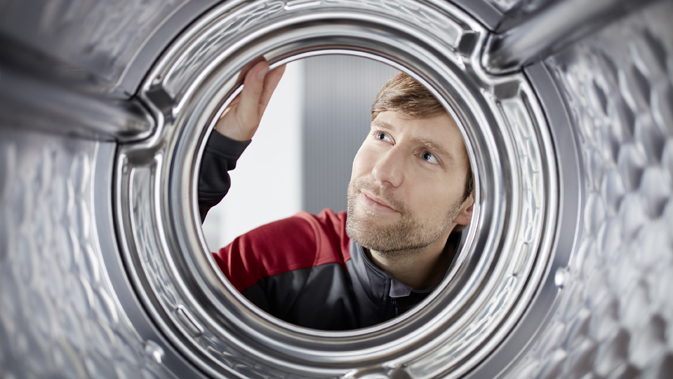
- Sale of used washing machines in the Netherlands
- Several refurbishment and recycling projects have been running for a year
- Circularity as focus of sustainability strategy
Conserving resources, reducing waste, returning materials and products into circulation: A fully functional circular economy is the key to rising to the challenges of climate change, the waste crisis and scarce resources. Miele has pronounced the circular economy a strategic issue and embarked on a course of action. The company is currently trialling various aspects of circularity under real-life conditions. The domestic appliance manufacturer is selling refurbished washing machines in the Netherlands and researching a reuse of parts and materials.
‘With our durable and energy-saving domestic appliances we have been making a valuable contribution for decades towards conserving natural resources, and now intend to implement the principle of circularity at Miele with even greater conviction’, says Rebecca Steinhage, Executive Director Human Resources and Corporate Affairs and responsible for sustainability at Miele. True to Miele’s own motto of ‘Immer Besser’, Miele has set itself the goal of ‘creating a circular value creation chain in which all materials used in our appliances are returned into circulation at the end of their life cycles.’
Refurbishment project in the Netherlands successful
For over a year now, a Miele pilot project has therefore been running in the Netherlands to sell refurbished washing machines, that have been checked, repaired, cleaned and then offered with the ‘refurbished’ label. In the process, the machines are subjected to similar tests as new appliances before being sold at a reduced price. Half of the machines selected for the refurbishment project can, indeed, be repaired so that they are once again fully functional. ‘This gives our washing machines a new lease of life and allows us to offer customers Miele quality at an attractive price’, maintains Rebecca Steinhage.
Washing machines which cannot be repaired take another route: The high-quality electronic controls are removed and processed by a specialised company in Germany. They are then sold to consumers who reinstall them themselves. Over 90% of the electronic units harvested in this way can provide many years of reliable service.
In another part of the project, the detergent dispenser drawers are removed from the machines as these lend themselves well to recycling on account of their material composition. The material is separated out and sent to a recycling company where it is reprocessed as granulate for reuse in production. Miele is using this material to research on quality and possible applications for the future.
Electrolux Green zone refrigerator
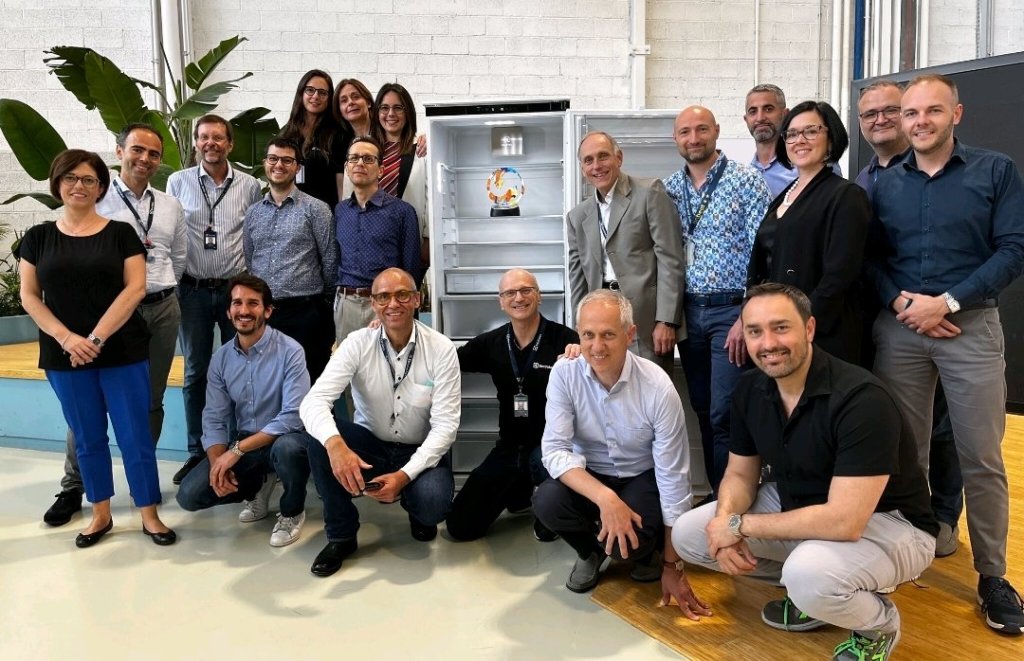
The Electrolux Group site in Susegana has opened its doors to the Plastics Recycling Award Europe 2023 – Automotive, Electrical or Electronic Product of the Year 2023! The award was in fact won by Green Zone MaxiSpace, the refrigerator developed and manufactured at the Treviso site. Green Zone MaxiSpace is the first built-in refrigerator with internal linings made of 70% recycled plastic from decommissioned refrigerators and represents a record in its category, given that 13% of the plastic used overall for its construction is recycled plastic. Thanks to the precious work of all Susegana colleagues, from those who work in R&D, in purchasing and up to those who work directly in the production areas, Green Zone MaxiSpace is a concrete example of our commitment to research and implement new and sustainable solutions, which allow us to reuse and reduce waste and the use of virgin materials. An approach that is also very popular with our consumers, who demonstrate that they perceive the value of this product both from the point of view of aesthetics and sustainability.
 WHITEGOODSNOW