Electrolux raises market outlook after profit beats forecasts

A pick-up in demand for fridges and washing machines amongst housebound buyers throughout the pandemic helped Electrolux beat earnings forecasts on Friday and submit its easiest quarterly margin ever.

The Swedish domestic equipment maker, whose competitors encompass Whirlpool, LG Electronics and Samsung Electronics, suffered early on in the coronavirus crisis, as lockdowns in various massive markets precipitated a sharp drop in demand and hit production.

“Sales additionally benefited from shoppers spending extra time at home, the usage of their home equipment extra intensively and allocating extra of their family budgets to domestic improvement,” CEO Jonas Samuelson stated in a statement.

The maker of manufacturers such as Frigidaire, Zanussi and Anova stated running revenue rose to 3.22 billion Swedish crowns ($367 million) from 1.06 billion, beating the 2.44 billion predicted by using analysts, Refinitiv Eikon records showed.

Net income rose to 32.0 billion crowns, with natural income growing by way of 15.2%, versus 30.9 billion predicted by way of analysts. Operating margin rose to 10.1%, the best ever quarterly margin for the firm.

LG Electronics expected its best-ever third-quarter earnings,

LG Electronics Inc. on Thursday expected its best-ever third-quarter earnings, as its home appliance and TV sales apparently got a boost from pent-up demand amid the pandemic-driven stay-at-home trend.

In its earnings guidance, the South Korean tech firm projected its operating profit at 959 billion won (US$831 million) for the July-September period, up 22.7 percent from a year earlier.

Its third-quarter operating income estimate beats the market consensus of 888.7 billion won in the data compiled by Yonhap Infomax, the financial arm of Yonhap News Agency, which surveyed 10 Korean brokerage houses in the past three weeks.

LG also expected its third-quarter sales to be 16.9 trillion won in the three-month period, up 7.8 percent from a year earlier. The figure is also above the market consensus of 16.4 trillion won.

Both sales and operating profit are the largest for any third quarter in its history.

LG did not break down performances of its respective business divisions, saying it will announce the detailed earnings later this month.

Analysts believe LG’s products highlighting health and hygiene features, such as air purifiers and steam dryers, led its home appliance sales amid the pandemic, while its TV sales also jumped due to the fast-growing stay-at-home economy and demand recovery in North America.

“As stay-at-home trends continue due to COVID-19, sales of its premium home appliances and TVs have been solid,” Lee Wang-jin, an analyst at eBest Investment & Securities, said.

“With reduced marketing costs, sales of 75-inch or larger TVs went very well.”

According to market researcher TrendForce, LG was the world’s second largest TV vendor in the third quarter after its TV shipments increased 6.7 percent on-year to 7.94 million units.

Compared with the second quarter, LG’s TV shipments soared 81.7 percent.

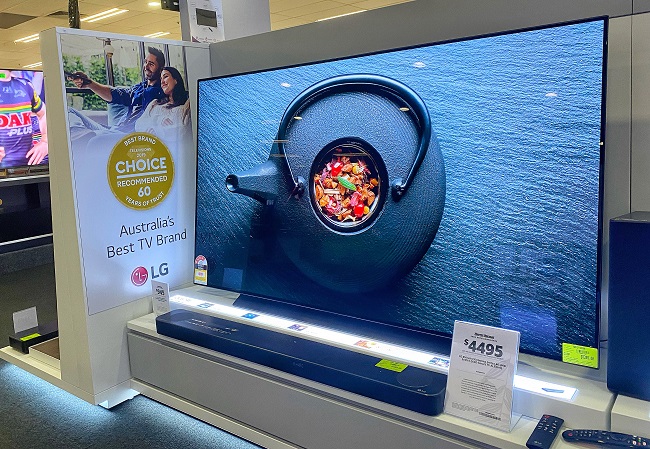
This photo provided by LG Electronics Inc. on Sept. 4, 2020, shows the company's OLED TV displayed at a store in Australia.

This photo provided by LG Electronics Inc. on Sept. 4, 2020, shows the company’s OLED TV displayed at a store in Australia.

LG’s struggling mobile business has been projected to narrow its operating losses in the third quarter with smartphone sales increasing.

The company expanded its budget smartphone lineup in major markets to overcome the long slump in the mobile business, which has been in the red since the second quarter of 2015.

“LG’s mobile business is expected to have reduced its operating loss with demand recovery in the United States and some benefits from the Huawei ban in the Latin American market,” Kim Rok-ho, an analyst at Hana Financial Investment, said.

LG’s vehicle component solutions business has been also tapped to post improved earnings in the third quarter as global automakers started to resume operations after lockdowns.

Shares in LG dived 2.91 percent to 93,300 won on the Seoul bourse, underperforming the broader KOSPI’s 0.21 percent increase despite its upbeat earnings guidance

Midea overcomes COVID-19 challenge to continue overseas expansion

Despite the challenges posed by the COVID-19 pandemic, Midea Group, a Chinese home appliance maker, will expand its global footprint this year, strengthen the layout of its supply chain, and increase its investment in Thailand, Egypt and Brazil.

Although overseas orders increased by 10 percent year-on-year in the first half of this year, that was not enough to avoid declines in both revenue and net profit.

First-half net profit was 13.90 billion yuan ($2 billion), down 8.29 percent, on a revenue of 139.70 billion yuan, down 9.47 percent. More than 40 percent of its revenue came from overseas markets as Midea added more than 11,000 sales outlets abroad.

The company underlined its e-commerce business. Its products now cover major online retail websites in Italy, the United Kingdom and France.

“We are more willing to build joint ventures in overseas markets, especially countries and regions taking part in the Belt and Road Initiative,” said Fang Hongbo, chairman and president of Midea.

Fang noted that growing market demand in emerging countries and regions, along with an improving domestic demand for smart home appliances, will help boost sales in the years ahead.

“We need to rethink the layout of overseas manufacturing bases,” Wang Jianguo, vice-president of Midea, said.

The company will also look for suitable places to establish a manufacturing base in North America.

Established in 1968, the Foshan, Guangdong province-based Midea makes air conditioners, refrigerators, laundry appliances, kitchen appliances and various small home appliances. It has 28 research and development centers and 34 major production bases around the world.

Its orders from overseas markets rose by 26 percent on a yearly basis in the first quarter. Wang has strong confidence that the company’s performance in the second half of this year will improve despite COVID-related changes and uncertainties.

The company will strengthen its global supply chains and increase investment in Thailand, Egypt and Brazil. In April, Midea began to build an air conditioner factory in Thailand. It is also preparing to build a manufacturing base in Egypt, its 18th overseas.

First-half retail sales of home appliances in China were worth 369 billion yuan, down 14 percent year-on-year, due to COVID-19, said a report released by the China Center for Information Industry Development, which is part of the Ministry of Industry and Information Technology.

The CCIID report also said the market for most of home appliances has shrunk and sales fell in the first half of the year.

“The growth rate of the domestic home appliance market is dropping, so major players should accelerate steps to expand in overseas markets such as North America, South America, Africa and Europe as they continue to show huge growth potential in low, medium and high-end products,” said Liang Zhenpeng, a consumer electronics analyst.

Liang noted in the past most of the Chinese enterprises adopted the original equipment manufacturer or OEM model, but nowadays they tend to build their own brands to be competitive globally.

Midea’s more than 150,000 staff members man its 17 production bases in overseas markets, with its products sold in more than 200 countries and regions. Midea has set up overseas 18 R&D centers in the United States, Japan, Italy, Germany, Singapore, Austria, Israel and other countries.

Since the establishment of its first overseas plant in Vietnam in 2007, Midea has efficiently expanded its operations. The company has stepped up its go-global push in recent years through mergers and acquisitions.

Midea acquired a 32.5 percent stake in Egypt-listed air conditioner manufacturer Miraco. It took a majority stake in German industrial robotics manufacturer Kuka in 2016, marking another important step in the company’s bid to expand into automation and smart manufacturing.

In 2017, it purchased more than a 50 percent stake in Israeli motion solution provider Servotronix Motion Control. Midea also acquired an 80 percent stake in Italian air conditioner maker Clivet SpA and bought the white home appliance products business of Japanese home appliance manufacturer Toshiba Corp in 2016.

The traditional home appliance market is almost saturated and companies need to seek new growth points, said Dong Min, an independent researcher of the home appliances sector.

“Expansion into overseas markets could not only relieve the pressure of high inventory in the domestic market but increase the international influence of Chinese home appliance companies.”

Midea announced in 2018 it would invest 13.5 billion Indian rupees over the next five years to set up a science and technology park in India. Covering an area of roughly 270,000 square meters, the project is estimated to generate direct and indirect employment opportunities for more than 2,000 people.

The park will produce 500,000 refrigerators, washing machines, water purifiers and water heaters respectively, 1.5 million household air conditioners, 250,000 commercial air conditioners, and 4.5 million air conditioner compressors annually.

Samsung tipped to log strong Q3 earnings on solid chip biz, mobile sales recovery

Samsung Electronics Co. is expected to report strong third-quarter earnings, analysts here said Monday, as its mainstay semiconductor business remained solid despite a decline in memory prices, while its mobile and home appliance sales soared on pent-up demand amid the pandemic.

Samsung was projected to log 63.95 trillion won (US$54.5 billion) in sales in the July-September period, up 3.1 percent from a year earlier, while operating profit was estimated to surge 33.7 percent on-year to 10.4 trillion won over the period, according to Yonhap Infomax, the financial news arm of Yonhap News Agency, which compiled data from 17 brokerage houses.

Should Samsung meet the consensus, the tech giant will post its best quarterly performance since the fourth quarter of 2018, when it logged an operating profit of 10.8 trillion won.

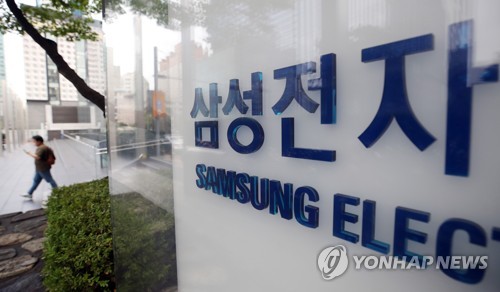
An outdoor sign of Samsung Electronics Co. at the company's office building in Seoul (Yonhap)
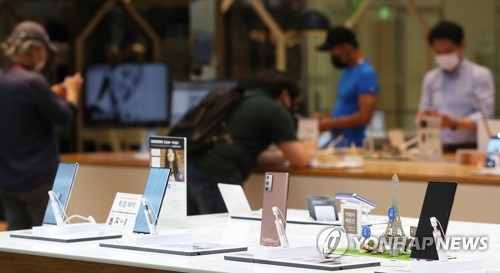
This file photo taken Aug. 7, 2020, shows Samsung Electronics Co.'s Galaxy Note 20 smartphones displayed at a store in Seoul. (Yonhap)
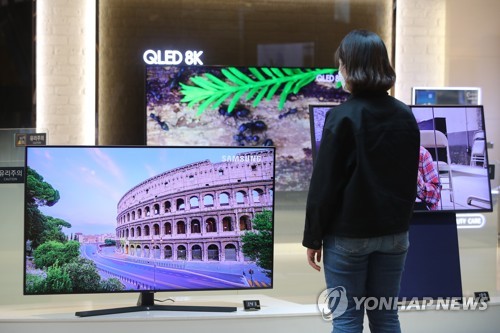
This file photo taken April 29, 2020, shows a customer looking at Samsung Electronics Co.'s QLED TVs at a store in Seoul. (Yonhap)

An outdoor sign of Samsung Electronics Co. at the company’s office building in Seoul (Yonhap)1 of 4hide caption

Compared with the previous quarter, the estimated figure suggests Samsung seeing a 20.7 percent increase in sales and a 27.6 percent jump in operating profit.

Samsung, the world’s leading memory chip and smartphone producer, is expected to announce its third-quarter earnings guidance next week.

Analysts have been raising their earnings outlook for Samsung in recent weeks after they assessed that its chip business is not likely to suffer a big drop in sales despite a decline in memory prices prompted by an excess in inventory.

Server DRAM products in the third quarter were projected to suffer a 10-15 percent price drop in the third quarter, according to market researcher TrendForce, which also estimated that prices for mobile DRAM and consumer DRAM chips to see up to an 8 percent and maximum 10 percent decline, respectively.

However, rush orders from Huawei Technologies Co., the world’s top telecom equipment maker and No. 2 smartphone producer, apparently helped Samsung’s chip business to stay afloat.

Analysts predicted Samsung’s chip business to post an operating profit of around 5 trillion won in the third quarter of the year.

Huawei, one of Samsung’s five largest customers, has been aggressively procuring semiconductors ahead of the U.S. export restrictions that have been in place since Sept. 15.

“Bit growth for DRAM and NAND flash is expected to mark 3 percent and 12 percent quarter-on-quarter increases, respectively, better than its previous guidance,” said Kim Kyung-min, an analyst at Hana Financial Investment.

“Rush orders from its Chinese client, along with a better yield rate and increased wafer input from the expansion of its Xian plant, pushed up the growth,” she said.

Analysts also predicted that Samsung’s foundry business logged growth in the third quarter. The company reportedly secured orders from Qualcomm and Nvidia to manufacture their latest chips.

Samsung’s mobile business was tipped to see a big improvement in its earnings with increased smartphone sales and reduced marketing costs.

Many analysts here predicted that Samsung’s mobile business logged 4 trillion won in operating profit in the third quarter, more than double its second-quarter operating profit of 1.95 trillion won.

Samsung’s Galaxy smartphone sales were estimated to be around 80 million units in the third quarter, about a 50 percent increase from the previous quarter, while that of tablets reached 10 million units, roughly 45 percent higher than the second quarter, analysts added.

“It appears that Samsung has performed well amid Huawei’s struggle and Apple’s new iPhone launch delay, while its tablet sales benefited from a stay-at-home trend,” said Song Myung-sub, an analyst at Hi Investment & Securities. “With decreased marketing costs amid the pandemic, the mobile business unit’s operating margin is expected to be around 10.5 percent in the third quarter.”

Samsung’s home appliance business was also tipped to get a boost from pent-up demand amid the pandemic-driven stay-at-home economy with a sharp increase in its TV sales.

Some analysts even predicted the company’s consumer electronics unit to post over 1 trillion won in operating profit in the third quarter, its best quarterly performance since the second quarter of 2016.

“Considering TV shipments in July and August, it appears that Samsung’s third-quarter TV shipments have posted a better growth than the company’s earlier estimate of a 40 percent increase from the previous quarter,” said Lee Seung-woo, an analyst at Eugene Securities.

According to a recent report from market tracker Omdia, the global QLED TV market, led by Samsung, was projected to grow to 2.44 million units in the third quarter, up 83.9 percent from a year earlier.

Samsung’s display business was projected to post mediocre earnings in the third quarter due to the delayed launch of Apple’s new iPhone 12 series.

Midea

Midea Group announced that it has featured on the 2020 Fortune Global 500 List for the fifth year running, ranking 307th place, moving up 5 places compared to 2019. The Group first entered the Fortune Global 500 list in 2016. Over the past five years, Midea has continuously climbed up the ranks thanks to the company’s dedication towards innovation. This year, Midea Group has started transforming five of its key businesses, including Consumer Appliances, HVAC Systems, Components, Industrial Automation and Smart Logistics. “Looking ahead – they state from the company – Midea Group will continue to focus on achieving its aim of becoming a world-leading technology corporation through the development of innovative platforms including its retail and industrial cloud arms.”
The Group expresses its satisfaction for this result after a difficult year spent facing the pandemic problems.

«As a company with major operations in China and around the world – the CEO, Paul Fang wrote on February to all the Midea staff – we have a responsibility to contribute to the fight against this epidemic. I am extremely proud of the efforts that this company has already made and the fact that we were one of the first to respond. We donated thousands of appliances to Huoshenshan Hospital and have donated 100 million yuan to contribute towards the relief efforts.

Samsung and Hanssem

Samsung Electronics Co. on Sunday signed a partnership agreement with South Korea’s leading furniture maker Hanssem Co. to expand business opportunities amid the pandemic-driven stay-at-home trend.

Under the deal, Samsung will cooperate with Hanssem in the home interior remodeling business. The tech giant will provide its latest home appliances such as refrigerators and dishwashers that fit with Hanssem’s furniture in interior remodeling.

The two sides will also collaborate in the smart home solutions business and will share retail infrastructure, such as displaying products from each company at its stores.

The latest deal comes as Samsung seeks to become a lifestyle brand with customizable products amid the COVID-19 pandemic.

Lee Jae-seung, who heads digital appliances at Samsung, recently said the company is “recalibrating” its strategy in the era of the pandemic. He added that home has become more important than ever as people practice social distancing and that home appliances need to reflect the change.

The collaboration with Hanssem is expected to help Samsung launch more products under its Project Prism, which reflects consumers’ lifestyles and allows them to personalize the materials, colors, shapes and designs of products.

So far, the company has introduced refrigerators and laundry appliances under Project Prism.

Midea net profit down 8.3 pct in H1

Midea Group, a leading Chinese home appliance manufacturer, reported declines in both revenue and net profit in the first half of 2020 (H1) as the COVID-19 epidemic hit its business.

Net profit attributable to its shareholders totaled 13.9 billion yuan (about 2 billion U.S. dollars) in the January-June period, down 8.29 percent year on year, Midea said in its interim financial report filed with the Shenzhen Stock Exchange.

During the six months, the company generated total revenue of 139.7 billion yuan, a year-on-year decrease of 9.47 percent, according to the interim report.