
Did you know that every time you wash synthetic clothes—like polyester, nylon, or acrylic—tiny plastic particles are released into the water? These microplastics are too small to be captured by standard wastewater treatment systems, meaning they often end up in rivers, oceans, and eventually, our ecosystems.
Bosch, a leader in sustainable innovation, has developed a game-changing solution: the WMZMPF10 Microplastic Filter, designed to dramatically reduce microplastic pollution from laundry.
✅ 97% Filtration Efficiency
This advanced filter captures:
– Microplastic particles
– Natural fibers
– Hair
– Detergent residue
All without the need for replacement cartridges or extra maintenance. It’s a powerful way to keep your laundry routine clean—and your conscience even cleaner.
🔄 Self-Cleaning Convenience
Thanks to its smart self-cleaning system, the Bosch filter stays effective for up to 6 weeks or 20 wash cycles before needing to be emptied. When it’s full, simply dispose of the collected waste using the included spatula—quick, hygienic, and hassle-free.
🛠️ Universal Fit & Easy Installation
The WMZMPF10 is compatible with all standard washing machines. Setup is simple:
– Mount it 10 cm above the water inlet
– No drilling required
– Scan the QR code for a step-by-step installation guide
🌍 Why It Matters
Microplastics are a growing environmental concern. By adding Bosch’s microplastic filter to your laundry setup, you’re taking a proactive step toward cleaner water and a healthier planet.
Tag Archives: microplastic filter
Electrolux Launch a Microplastic Filter Launch a Microplastic Filter
According to our consumer study into microplastics and laundry**, part of the problem is a lack of understanding of what ‘synthetic’ means, with 94% of all adults not knowing how much plastic is in clothes. Our study found 68% of European adults were unaware that Nylon is a plastic fiber while 62% did not know Polyester, the world’s commonly used fiber, is plastic.
With the launch of the Microplastic Filter, we can help consumers reduce their own environmental impact when it comes to clothing care. We estimate that the new filter for washing machines can help prevent up to two plastic bags worth of microplastic fibers from being released from laundry, per household, every year. The filter, designed to fit on the laundry wall and made from 50% recycled plastic, works with both Electrolux and AEG washing machines.
New external filtration device from Xeros
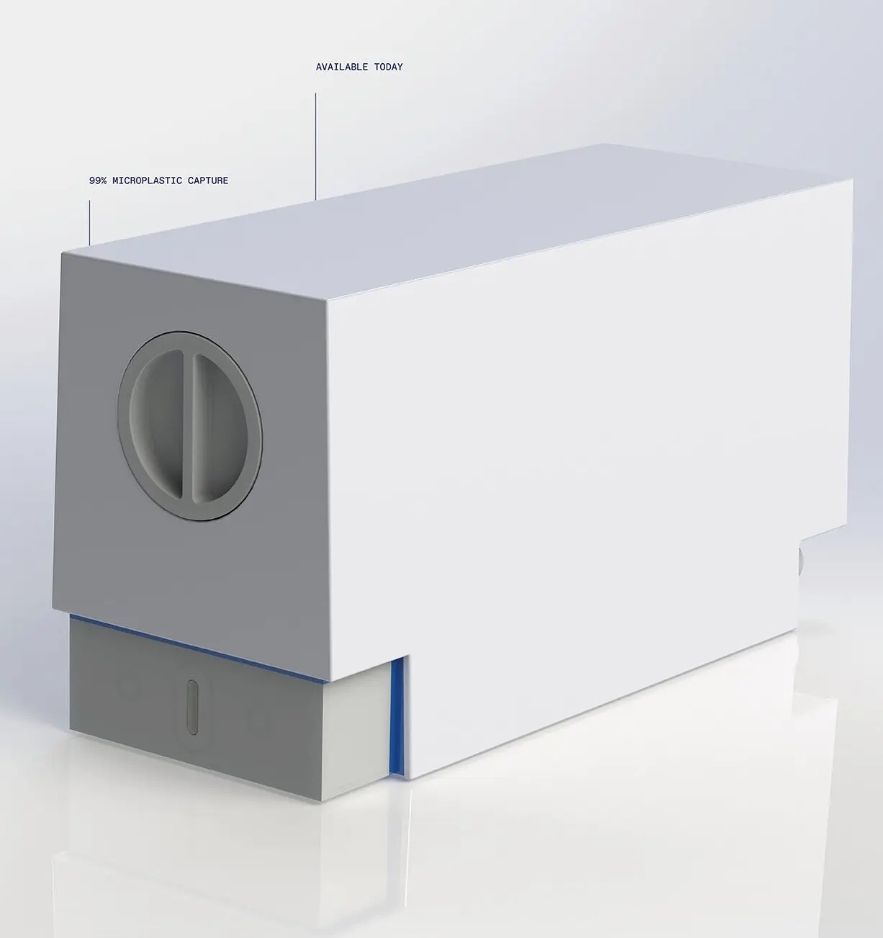
Xeros announce the launch of a brand new product, the XF3, our independent and freestanding microfibre filtration device. XF3 enables our patented and market leading microfibre filtration system, XFilter to be housed as a stand-alone solution, compatible with any washing machine model. The XF3 achieves a 99% microplastic capture rate and is designed for upmost consumer ease, requiring no replacement cartridges and has one of the lowest emptying frequencies of all available filters. To make the product even more consumer-friendly, XF3 can be installed at any height enabling its sleek modular design to sit on a countertop or under a sink. It is programmed to automatically start when the washing machine drains and has an alert when it needs emptying, enabling users to simply plug it in and leave it to work with complete peace of mind.
XF3 is available immediately for licensing and branding partners and will be launching to consumers in 2024.
Did you know?
Did you know? 94% of all adults are unaware of how much plastic is in clothes, according to our latest report into attitudes and behaviors towards laundry. When put to a fiber test, 68% of Europeans were unaware that Nylon is a plastic fiber and 62% didn’t know Polyester, the world’s commonly used fiber, is plastic.
Part of the problem, according to sarah schaefer, Electrolux VP Sustainability Europe, is a lack of awareness of what ‘synthetic’ means.
“We have become so accustomed to the phrase ‘synthetic material’ that the majority of us have lost sight of the fact that most of these synthetic materials are actually plastic,” said Schaefer. “Our research shows that there is an urgent need to help people understand more about the materials they are buying and how best to care for them as well as encouraging as many people as possible to adopt more
environmentally positive laundry practices,” continued Schaefer. “By taking a series of small steps, including installing a Microplastic Filter, each of us can reduce our environmental impact from textiles.”
 WHITEGOODSNOW