
Homa Global has officially begun construction on its first overseas manufacturing base in Chonburi, Thailand. The groundbreaking ceremony on 28 September welcomed top executives and partners, marking a major step in the company’s global expansion.
With an initial investment of RMB 680 million and a total planned investment over RMB 1 billion, the 200,000-square-metre facility will include production lines for refrigerators and freezers, a components centre, offices, and a showroom. Operations are set to begin in 2026, boosting output by 3 million units annually and creating over 3,300 jobs.
CEO Michael Yao stated, “From Zhongshan to Chonburi, from local to global — we have forged our own path.” The smart, digital factory will be fully integrated with Homa’s China headquarters, strengthening supply chains and supporting global growth.
As the world’s largest refrigerator exporter and fourth in global production, Homa continues to lead in cooling innovation, now serving over 130 countrie
Category Archives: Manufacturing
BSH to Cut 1,400 Jobs Amid Declining Market Demand
BSH Hausgeräte has announced plans to reduce its workforce by approximately 1,400 employees, citing persistent overproduction and weakening consumer demand. The decision, revealed at the company’s headquarters in Munich, reflects broader industry challenges including a sluggish real estate market and a growing shift toward budget-friendly appliances.
The restructuring will significantly impact two key manufacturing sites in Germany. The Bretten facility in Baden-Württemberg will see the most substantial changes, with the discontinuation of stove and extractor hood production, as well as logistics operations, by the end of Q1 2028. This move will affect around 980 employees.
Meanwhile, the Nauen site in Brandenburg will phase out washing machine production by mid-2027, impacting approximately 440 employees.
BSH emphasized that these measures are part of a long-term strategy to align production capacity with market realities and evolving consumer behavior
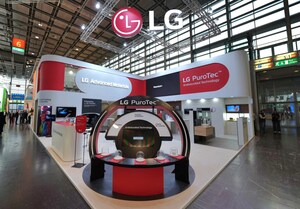
LG’s PuroTec™ Ushers in a New Era of Hygiene-First Home Appliances
LG Electronics has officially introduced its cutting-edge antimicrobial material, PuroTec™, to the European market—marking a pivotal moment for hygiene innovation in domestic appliances. Unveiled at K 2025, the world’s leading plastics and rubber trade fair in Düsseldorf, Germany, PuroTec™ is poised to redefine how we think about cleanliness and contamination control in everyday household products.
🔬 What Is PuroTec™?
PuroTec™ is a glass powder-based antimicrobial and antifungal additive. When incorporated into materials like plastic, paint, or rubber—even in small amounts—it actively combats odors and microbial contamination. Its versatility makes it ideal for a wide range of applications, but LG is placing a strong emphasis on its transformative potential in home appliances.
🏠 Domestic Appliances Get a Hygiene Upgrade
At the K Show, LG showcased a lineup of PuroTec™-enhanced products, with a spotlight on washing machines and refrigerators—two appliances that are especially vulnerable to moisture, mold, and bacterial buildup. By embedding PuroTec™ into the materials used in these appliances, LG is offering consumers a smarter, more sanitary solution for everyday living.
Other household items on display included:
– Bathroom fixtures with antimicrobial surfaces
– Sofas and clothing treated to resist fungal growth
– Automobile seats designed for cleaner, longer-lasting use
This innovation aligns with growing consumer demand for health-conscious home environments, especially in the wake of heightened awareness around hygiene and indoor air quality.
Arçelik Secures €150 Million EBRD Loan to Accelerate Green Manufacturing in Turkey
Turkish home appliance giant Arçelik has announced a new €150 million ($173.9 million) financing agreement with the European Bank for Reconstruction and Development (EBRD), aimed at advancing its environmentally sustainable manufacturing initiatives.
The funding will be split into two strategic components:
– €83 million will be allocated to Turkey’s first externally verified green loan in the manufacturing sector. This portion will support Arçelik’s comprehensive green investment program, including the transformation of production processes, modernization of facilities, and R&D efforts focused on developing eco-friendly appliances.
– €67 million will be used to upgrade key manufacturing sites—specifically, the refrigerator plant in Eskişehir and the cooking appliances facility in Bolu—enhancing energy efficiency and operational sustainability.
This latest investment builds on a previous €150 million EBRD loan that enabled Arçelik to produce quieter, more energy-efficient refrigerators and washing machines, which have seen strong demand in international markets.
According to the company, these new initiatives are designed to help meet its 2030 climate goals and align with the broader objectives of the Paris Agreement
Groupe Brandt Seeks Strategic Lifeline Amid Market Turbulence
The European home appliance sector is once again facing tough headwinds, and this time, the storm has reached one of France’s last-standing giants. Groupe Brandt, a century-old manufacturer and a key player in the French appliance landscape, has entered creditor protection in a bid to stabilize its finances and attract a strategic investor.
🏛️ Court-Approved Restructuring
On October 1, the Nanterre Economic Court granted Brandt’s request for protection, enabling the company to freeze its debts and continue operations while actively seeking a financial partner. Owned by Algeria’s Cevital Group since 2014, Brandt’s leadership views this move not as a retreat, but as a strategic reset—an opportunity to accelerate talks with potential investors.
Production at Brandt’s facilities in Orléans and Vendôme remains uninterrupted, and local distributor Elmax Store reports no immediate impact on its operations.
🧩 Who Might Step In?
Brandt’s portfolio includes not just its namesake brand, but also De Dietrich, Sauter, and Vedette—making it a valuable acquisition target. With 750 employees across France and a service hub near Paris, the company is far from marginal. CEO Daniele Degli Emili has already reached out to business partners, assuring them that several “serious and well-negotiated” investor options are on the table.
🌍 A Broader Industry Reckoning
Brandt’s situation reflects a deeper crisis among Europe’s traditional appliance manufacturers. Market consolidation is no longer a possibility—it’s a necessity. Chinese conglomerates have been steadily acquiring European brands: Hisense took over Gorenje in 2018, Haier absorbed Candy Hoover in 2019, and Midea snapped up Teka earlier this year. Midea even held talks with Electrolux in 2023, though no deal materialized.
📉 Electrolux and the Financial Squeeze
Even Electrolux, long considered a pillar of European manufacturing, has felt the strain. Despite returning to profitability in 2025 after a sweeping restructuring, the Swedish company reported a negative operating cash flow of $405 million in H1, pushing net debt to nearly $3 billion. Analysts now anticipate a capital injection of at least $1.79 billion via a share issue, and S&P Global Ratings has downgraded its credit score to BBB-, teetering just above speculative grade.
🚨 Industry Survival at Stake
The pressure from Asian—particularly Chinese—competitors is mounting. With only a handful of independent European manufacturers left, the industry’s future looks precarious. In a rare show of unity, several appliance makers have issued an open letter to European Commission President Ursula von der Leyen, warning that the very survival of Europe’s home appliance sector is in jeopardy.
Whirlpool Under Pressure: Q2 Earnings Miss and Mounting Market Challenges
Whirlpool Corporation is navigating turbulent waters as it faces mounting financial and operational headwinds. The appliance giant’s Q2 2025 earnings fell short of analyst expectations, driven by continued weakness in North American demand and profit margins hovering near decade-long lows—despite aggressive cost-cutting measures.
The company’s strategic pivot toward innovation and premium product offerings has yet to counterbalance growing affordability concerns and broader cyclical risks. Rising debt levels and a strained balance sheet have further intensified investor caution, prompting a recent ‘sell’ rating from market analysts.
While Whirlpool remains committed to long-term transformation, the current economic climate poses significant hurdles. For industry watchers and stakeholders, the coming quarters will be critical in assessing whether the brand can regain momentum or if deeper structural shifts are needed.

Beko Radomsko Reaches 45 Million Appliances
A major achievement has just rolled off the production lines at Beko Radomsko facilities in Poland—the 45 millionth home appliance! This landmark moment reflects years of dedication, innovation, and teamwork.
Since opening its doors in 2008, Radomsko has evolved into one of Central Europe’s largest and most advanced manufacturing hubs. With six dishwasher lines and four washing machine lines, the site produces over 3 million appliances annually, serving households across the continent.
👷♀️👷♂️ At the heart of this success are the 1,500 talented colleagues who power Radomsko’s growth. As Michele Fabbrocile, MBA, MSc, Director of the Radomsko plants, proudly shares:
> 💬 “Our employees are the heart of this plant and the main reason why we have continued to grow for so many years.”
Radomsko operates under World Class Manufacturing standards, with continuous investment in cutting-edge technology, sustainable practices, and product excellence. It’s not just a cornerstone of our production network—it’s a benchmark for responsible industry.
Haier Powers Up in Thailand: Chonburi Air Conditioning Industrial Park Begins Production
On September 23rd, 2025, Haier marked a major milestone in its global expansion strategy with the official launch of production at its Chonburi Air Conditioning Industrial Park in Thailand. This state-of-the-art facility, located at the WHA Eastern Seaboard Industrial Estate 3, is set to become the largest air conditioner manufacturing base in Southeast Asia—and Haier’s biggest overseas AC production hub.
🚀 A Giant Leap for Smart Manufacturing
Spanning over 324,000 square meters, the Chonburi plant is designed for scale and innovation. With a planned annual production capacity of 6 million units, the facility will manufacture a wide range of air conditioning products, including smart ACs equipped with sensor technology and Wi-Fi connectivity. The first phase kicks off with a capacity of 3 million units, expected to double by 2027.
Pope Francis Stands with Italian Workers Facing Mass Layoffs
In a heartfelt message during Sunday’s Angelus, Pope Francis voiced his solidarity with nearly 2,000 workers facing redundancy at Beko Europe’s Italian plants. His words came just one day after meeting a delegation of affected employees at the Vatican.
> “I am close to the workers of Siena, Fabriano, and Ascoli Piceno, who defend in solidarity the right to work, which is a right to dignity,” the Pope said. “May their jobs not be taken away, for economic or financial reasons.”
The announcement of 1,935 job cuts follows Beko Europe’s decision to shutter three major facilities by the end of 2025: the Siena plant in Tuscany, the Comunanza site near Ascoli Piceno in Marche, and the cold line in Cassinetta near Varese in Lombardy. These closures mark a significant shift in the company’s Italian operations and have sparked widespread concern among unions and local communities.
Beko Europe, formerly part of Whirlpool’s Italian division, has been engaged in a long and complex labor history—one that includes 12 years of redundancy payments and restructuring efforts. The latest move is part of a broader strategic plan communicated by the Turkish multinational parent company, raising questions about the future of industrial employment in the region.
As workers rally to protect their livelihoods, Pope Francis’s public support adds moral weight to their cause, reminding the world that behind every economic decision are families, communities, and the fundamental human right to dignified work.
Haier Invests $490M to Reshore GE Appliances Production in the U.S.
Haier Group is making a bold move to strengthen its American footprint, investing $490 million to expand the GE Appliances manufacturing plant in Louisville, Kentucky. The investment will bring washing machine production back to U.S. soil, with new production lines set to launch in 2027.
This reshoring effort aligns with Haier’s long-term vision to position GE Appliances—acquired in 2016—as the leading washing machine brand in America. Over the past decade, Haier has poured €3.5 billion into developing GE’s production capabilities.
Kevin Nolan, President and CEO of GE Appliances, emphasized the strategic importance of the move: “Reshoring is essential because of our ‘zero distance to customers’ strategy.” The investment not only boosts domestic manufacturing but also reinforces Haier’s commitment to innovation, agility, and customer-centric growth.
 WHITEGOODSNOW