
Smart white goods promise convenience, but software bugs can leave essential appliances useless. Here’s what the data says and what to check before you buy.
Modern white goods promise seamless convenience, with over-the-air updates, remote controls, and AI-driven automation. But a growing list of real-world glitches shows a major drawback: a software bug can turn an essential household appliance into a very expensive paperweight.
Tag Archives: smart home
Beko Expands AI-Powered Customer Care Network
The appliance giant has unveiled a major expansion of its global after-sales operations, combining human expertise, connected diagnostics and AI-powered tools to deliver faster, more proactive customer support.
Continue readingHisense Unveils the AI-Powered Future of White Goods at IFA Berlin 2026
The smart home is no longer a distant promise. At IFA Berlin 2026, Hisense took a decisive step forward, showing how everyday white goods—refrigerators, washing machines, cookers, air conditioners and more—are evolving from passive appliances into proactive, intelligent assistants.
Continue readingThe White Goods Giants Face a Tough 2026: Why Midea Is Holding Up Best
The first-half results from China’s leading home appliance manufacturers reveal an industry facing significant pressure.
Continue readingU.S. Regulatory Spotlight Turns to Foreign‑Made Robot Vacuums
What the FCC’s latest scrutiny means for the smart‑cleaning sector
The U.S. robot vacuum market is facing fresh turbulence as federal regulators tighten their focus on foreign‑manufactured smart home devices. The Federal Communications Commission (FCC) has signalled that connected appliances—including robot vacuums equipped with cameras, Wi‑Fi modules, and advanced mapping systems—may soon face stricter compliance checks if they originate from overseas suppliers.
This development arrives at a time when robot vacuums are enjoying record adoption across North America, driven by AI‑powered navigation, multi‑floor mapping, and integrated home‑ecosystem compatibility. But the FCC’s renewed attention on foreign devices raises questions for retailers, distributors, and manufacturers operating in the U.S. market.
—
🔍 Why the FCC Is Paying Attention
The FCC’s concern centres on two areas:
– Wireless communication modules — Many robot vacuums rely on Wi‑Fi, Bluetooth, and proprietary RF systems. Any device transmitting data must meet U.S. spectrum and safety standards.
– Data capture and mapping — High‑end models now include LiDAR, optical cameras, and room‑mapping algorithms. Regulators want assurance that collected data is handled securely and not transmitted to unverified overseas servers.
While no blanket ban is in place, the FCC’s language suggests a more assertive stance on imports that lack transparent compliance documentation.
—
🛒 Impact on Retailers and Distributors
For U.S. retailers, the implications are immediate:
– Stricter import checks may slow down product launches from emerging Asian brands.
– Documentation demands could increase, especially around RF testing and data‑handling policies.
– Stock risk rises if a product is later found non‑compliant, potentially leading to recalls or sales freezes.
Major players—such as iRobot, Samsung, and Ecovacs—already maintain robust FCC certification pipelines. But newer entrants, particularly budget‑focused brands, may face hurdles.
—
🌍 What This Means for UK & EU Manufacturers
For brands selling into the U.S. from Europe or the UK, the message is clear:
Compliance is now a competitive advantage.
Manufacturers with established CE, UKCA, and FCC documentation will find themselves better positioned than low‑cost rivals who rely on minimal certification. Expect to see:
– More FCC‑ready product launches
– Increased emphasis on transparent data policies
– Retailers preferring brands with proven regulatory track records
🤖 Sector Outlook
Robot vacuums remain one of the fastest‑growing categories in smart home appliances. The FCC’s stance won’t halt innovation—but it will reshape the competitive landscape. Brands that invest in compliance, cybersecurity, and transparent data practices will gain trust with both regulators and consumers.
For the industry, this marks a shift toward “clean tech with clean data.”
Haier Ranked World’s No. 1 Smart Home Enterprise for 2025
Haier has been named the world’s No. 1 Smart Home Enterprise for 2025, according to new data from Euromonitor International. The ranking reflects global revenue across smart appliances, home security, lighting, and energy management.
The company has evolved into an AI‑driven smart home ecosystem provider, now offering 70+ connected lifestyle solutions across 11 home environments. Its unified platform enables seamless device communication and intelligent, scenario‑based services.
Haier’s ecosystem is used by over 130 million registered users worldwide, who rely on the platform to manage their homes more efficiently.
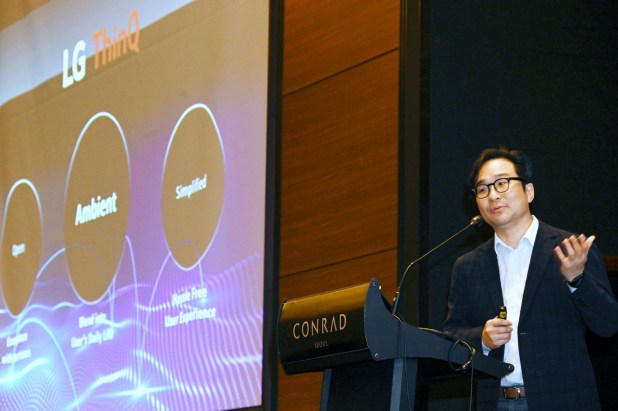
LG unveils vision for ThinQ smart home platform
LG Electronics said Monday it presented a blueprint for ThinQ, a platform brand that connects home appliances and consumer electronics with smart technology for higher efficiency, at the Connectivity Standards Alliance member meeting in Seoul.
Jung Ki-hyun, vice president of LG’s platform business center, attended the four-day event as a keynote speaker and shared the company’s vision for providing more consumer-friendly smart home services.
He outlined three core values of ThinQ: advancement, connectivity and openness.
“LG ThinQ will soon serve as a partner that enhances the lives of our consumers by creating a smart environment — whether that’s at work, home and on vacation — that is tailored to their lifestyles,” Jung said.
ThinQ users can enjoy heightened connectivity for LG home appliances by connecting ThinQ to the Internet of Things and other smart devices that enabled Matter, an Internet Protocol-based communications standard for smart home technologies.
In line with the global trend toward artificial intelligence-based service releases, LG looks to equip AI chatbot services and AI-based voice recognition technology to ThinQ.
It also hopes to propel ThinQ’s open innovation strategy by taking full advantage of the wide range of opportunities offered by AI. This includes providing support for virtual assistant software platforms such as Google Assistant and Amazon Alexa, which are gaining popularity across diverse consumer demographics.
“We are paving the way for the age of ambient computing. We will continue developing our AI technology and Internet of Things connectivity so our consumers can get the best smart home experience with ThinQ,” Jung said.
The CSA is an organization that drives collaboration in IoT by developing universal open standards that enable the connectivity and interaction of objects. It also specializes in the standardization of a protocol called Matter.
Alongside LG Electronics, this year’s event was attended by 134 members around the globe, including Apple, Amazon and Google.

