
Currys plc teamed up with Cancer Research UK (CRUK) to recycle unsellable tech donations from charity shops. Items will be collected at Currys’ depots, then refurbished, repaired, or responsibly recycled.Recycling over 50,000 tonnes of e-waste each year, Currys is the nation’s number one retail tech recycler and on an important mission to give technology a longer life. This has never been more important, as the UK lags behind other nations1 in-e-waste recycling
Tag Archives: appliance recycling
Miele increases commitment to Circular Economy and gives washing machines a second lease of life
Miele increases commitment to Circular Economy and gives washing machines a second lease of life
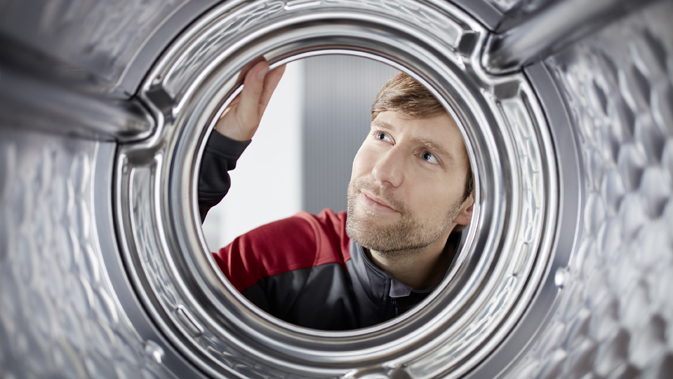
- Sale of used washing machines in the Netherlands
- Several refurbishment and recycling projects have been running for a year
- Circularity as focus of sustainability strategy
Conserving resources, reducing waste, returning materials and products into circulation: A fully functional circular economy is the key to rising to the challenges of climate change, the waste crisis and scarce resources. Miele has pronounced the circular economy a strategic issue and embarked on a course of action. The company is currently trialling various aspects of circularity under real-life conditions. The domestic appliance manufacturer is selling refurbished washing machines in the Netherlands and researching a reuse of parts and materials.
‘With our durable and energy-saving domestic appliances we have been making a valuable contribution for decades towards conserving natural resources, and now intend to implement the principle of circularity at Miele with even greater conviction’, says Rebecca Steinhage, Executive Director Human Resources and Corporate Affairs and responsible for sustainability at Miele. True to Miele’s own motto of ‘Immer Besser’, Miele has set itself the goal of ‘creating a circular value creation chain in which all materials used in our appliances are returned into circulation at the end of their life cycles.’
Refurbishment project in the Netherlands successful
For over a year now, a Miele pilot project has therefore been running in the Netherlands to sell refurbished washing machines, that have been checked, repaired, cleaned and then offered with the ‘refurbished’ label. In the process, the machines are subjected to similar tests as new appliances before being sold at a reduced price. Half of the machines selected for the refurbishment project can, indeed, be repaired so that they are once again fully functional. ‘This gives our washing machines a new lease of life and allows us to offer customers Miele quality at an attractive price’, maintains Rebecca Steinhage.
Washing machines which cannot be repaired take another route: The high-quality electronic controls are removed and processed by a specialised company in Germany. They are then sold to consumers who reinstall them themselves. Over 90% of the electronic units harvested in this way can provide many years of reliable service.
In another part of the project, the detergent dispenser drawers are removed from the machines as these lend themselves well to recycling on account of their material composition. The material is separated out and sent to a recycling company where it is reprocessed as granulate for reuse in production. Miele is using this material to research on quality and possible applications for the future.
Electrolux Group launches refurbished product subscription service for Swedish consumers
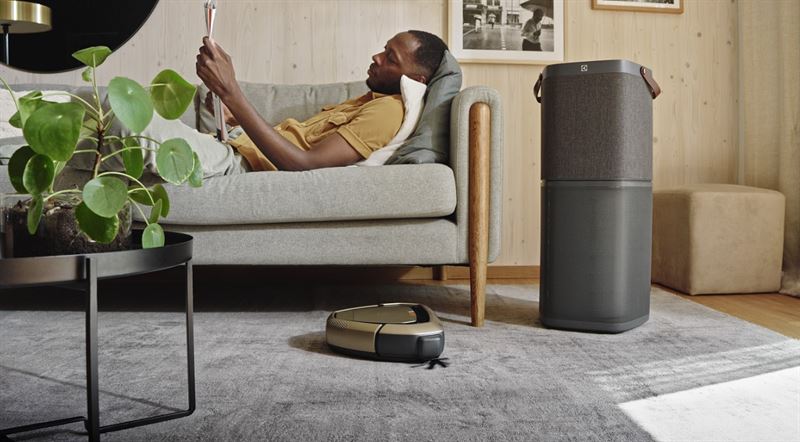
According to statistics about worldwide electronic waste,* every Swede generates 20 kg of electronic waste annually. With the launch of AtEase, Electrolux Group’s new product subscription-based service for Sweden, consumers can make more sustainable choices for the home.
AtEase is part of Electrolux Group’s ambition to reduce electronic waste and contribute to the circular economy, with Swedish consumers having the option to subscribe to a new product or a refurbished one.
AtEase is an all-inclusive service that covers everything needed to keep the appliance running smoothly, including proactive maintenance, automatic shipments of accessories, and support (the appliance is replaced within three days if a fault occurs during the subscription). Crucially, every product returned to Electrolux Group is refurbished for reuse or gives life to new appliances by donating its parts.
“If the product is too damaged or worn to be refurbished, we can reuse parts such as circuit boards, rubber bumpers, or casings to extend the life of other products. In fact, 75% of the parts we use in the refurbishment of a robot vacuum cleaner have been harvested from an end-of-life product,” says James Ostridge, Product as a Service Director.
The products currently offered through AtEase include the Pure i9 Robotic Vacuum Cleaner, Well A7 Air Purifier and Pure A9 Air Purifier. Further floor and air care products will be introduced later this year, and more products, including kitchen and garment care, will be added to the service over time. The launch of AtEase is a natural step following a successful pilot launched in 2019 to offer Swedish consumers the Pure i9 on a subscription pay-per-use basis. AtEase will also be introduced to further markets beyond Sweden in the coming years.
Since July 2022, Electrolux Group has also offered landlords in Sweden a similar program of appliances-as-a-service for installations, maintenance and repair of appliances, prolonging the product life span and reducing electronic waste.
Meanwhile, in Singapore, the company launched a similar direct to consumer subscription model last year that offers the rental, set up, repair and recycling of products.
BRITS URGED TO RECYCLE MILLIONS OF UNWANTED FADDY KITCHEN APPLIANCES
Brits urged to recycle millions of unwanted faddy kitchen appliances
UK households are holding on to a whopping 18.2 million kitchen electricals that are rarely or never used.
According to research carried out on behalf of Recycle Your Electricals, millions of fad kitchen gadgets, from air fryers to bread makers, blenders to chocolate fountains, juicers to popcorn machines, are gathering dust in UK cupboards.
Ninety two percent of UK households own ‘FadTech’ – with an average of four items per home – but nearly half of households say their once-trendy items are now rarely or never used.
The top five most likely items to be gathering dust are: ice cream makers, chocolate fountains, hostess trolleys, popcorn machines and bread makers. The number of unused bread makers in UK cupboards would stretch from London to Paris and halfway back again.
In addition, there are an estimated 2.4 million unused blenders taking up space in cupboards.
Recycle Your Electricals is on a mission to get Brits to fish out their FadTech and donate or recycle them to allow the valuable materials in them to be reused as something even more useful.
For example, the estimated 2.4 million blenders gathering dust across the UK could be recycled into 2.1 million defibrillators, according to the study.
Scott Butler, executive director of the Recycle Your Electricals campaign, said: “We’ve all fallen for the latest FadTech – including me – and sometimes they become kitchen staples. But, often, after taking up counter space they’re consigned to a cupboard.
“They’re not cheap, so it can feel wasteful to clear them out but they can be recycled into something really useful or donated if they’re still in good condition. If you have FadTech to recycle, the easiest thing to do is visit our postcode locator to find your nearest drop-off point.”
Actor and presenter, Joanna Page, has a stash of FadTech, thanks to her children. She is backing the campaign, and said: “I’ve got children, so we get these items thinking they’ll be fun and they are at first. But then you don’t use them more than once a year and they just end up taking up space in your cupboard.
“I’ve got two waffle makers, I don’t even know why I need two. They’re not cheap, so it can be hard to part with them, but it’s great to hear they can be recycled and free up some all-important cupboard space.”Across UK homes, there are 6.5 million kettles, 3.4 million microwaves and 3.6 million toasters that are either broken or spare.
These could also be recycled into something really useful by visiting http://www.recycleyourelectricals.org.uk
Recycling plastic from Appliances
Once collected, recycled plastic from homeappliances can end up being used in a number of sectors:
🚜 Agricultural: 1.6%
🚗 Automotive: 33.1%
🏗️ Construction: 9.8%
💪 Durable goods: 9.0%
💻 EEE: 6.3%
🚢 Export: 18.4%
🔄 Other: 21.9%
More information https://statreport2022.applia-europe.eu/pillar/1/routes-of-recycled-plastic
 WHITEGOODSNOW