Candy new factory

Candy has invested 15 million euro for the launch of a new plant in Turkey dedicated to the production of smart home appliances.
The new production unit is located in Eskişehir, in the North-West of Turkey, where a modern structure covering an area of 13,600 m2 was built and inaugurated a few days ago on a property owned by the Group.
The new factory, where 300 workers will be employed with an annual production capacity of about 800,000 pieces, is born to develop a new high efficiency production process, based on the use of innovative practices aimed at creating smart appliances.
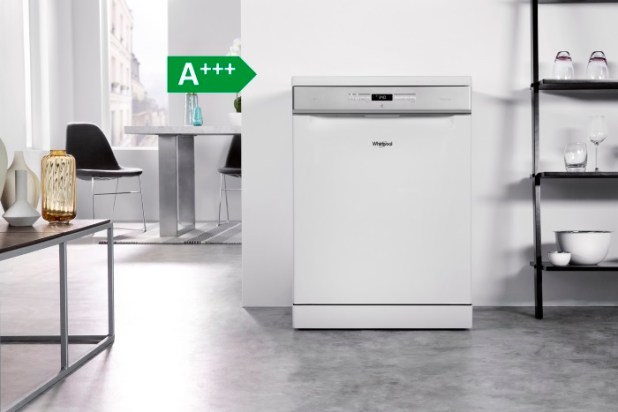
In the new plant, the second production unit of the Candy Group in Turkey, will be manufactured the first dishwasher on the market equipped with Artificial Intelligence and equipped with an internal optical sensor able to identify quantity and type of dishes, automatically suggesting the more appropriate program and the best options for their washing.

Midea

Midea Kitchen Appliance Division is affiliated to Midea Group, one of the largest household appliance manufacturers in China. Founded in 1968, Midea is one of the world’s largest kitchen appliance suppliers with annual sales revenue exceeding $23 billion, the world’s No.1 major appliances manufacturer according reported by Euromonitor[i] and is the world’s No. 1 microwave oven and No. 3 dishwasher manufacturer. It operates three production bases and two R&D centers in China in addition to a production base in Belarus and R&D centers in Bologna, Italy and Louisville, Kentucky.

About Midea

Established in 1968, Midea (SZ: 000333) is a publicly listed, Fortune 500 company, that offers one of the most comprehensive ranges in the home appliance industry. Midea specializes in air treatment, refrigeration, laundry, large cooking appliances, kitchen appliances, water appliances, floor care and lighting. Headquartered in Southern China, Midea is a truly global company with over 126,000 employees and operations in more than 200 countries. The company has 21 production facilities and 260 logistics centers worldwide. After nearly 50 years of continued growth, Midea now generates annual revenue of more than USD23 billion.

Other brands Midea owns

Little Swan is a well-known brand engaged in the manufacture of home appliances, particularly washing machines. It is among the 20 most valuable brands in China, with valuation estimated at 15.02 Billion RMB by R&F Business Ranking 2010. The company was established in 1958, when it stood alone as the first washing machine manufacturer in China. Little Swan was acquired by Midea in 2010.

MDV was created in 1999 under Midea’s Commercial Air-Conditioning (CAC) Division as a professional climatic solution brand for sales via specialized air-conditioning companies. MDV’s brand portfolio (range of products produced under MDV brand) consists of cutting-edge technology and commercial and industrial equipment. These include VRF (variable refrigerant flow) systems, chillers and fan-coils, compressor condensing units, light commercial air-conditioners, used in commercial segment. Focusing on the professional channel for more than 10 years, MDV brand is recognized worldwide as one “professional HVAC solutions.”

Hualing is one of China’s best known and most respected appliances brands. It was acquired by Midea in 2008. It specialises in air-conditioners and refrigerators.

Under the Welling brand, Midea Group excels in motor and driving systems. Welling products are widely applicable for use in the manufacturing of air conditioners, washing machines, refrigerators, dish-washers, small size home appliances and vehicles, and more.

As a joint venture between Midea and Toshiba-Carrier, GMCC develops compressors for the application of air-conditioning and heat pumps. This combined effort features one of the largest manufacturing operations of air-conditioning compressors in the world.

For more information, visit Midea at www.midea.com and www.midea.com/global.

Glen Dimplex jobs cut

Glen Dimplex Home Appliances is planning to cut almost 300 jobs from its 1,000-strong workforce in Prescot, Merseyside. The company says that changes on the High Street have affected sales and that it needs to cut costs and change its product range if it is to remain viable.

In a statement issued on Friday, the company said: “The proposed changes are likely to result in up to 300 potential redundancies over the course of the year, commencing from August

BSH

  • Growth worldwide: BSH sales revenue up in all regions; all brands and appliance categories make gains
  • BSH workforce tops 60,000 for first time, with almost 3,500 new jobs, 1,825 of them in Europe
  • Spending on capital investments and R&D increases again
  • BSH transforming into Hardware+ company – smart home appliances, digital services, Industry 4.0

Munich, March 13, 2018 (BSH) – BSH Hausgeräte GmbH has continued its trend of successes, reporting record sales revenue for the eighth time in a row. In fiscal year 2017, the globally operating, multi-brand company boosted sales to EUR 13.8 billion, growing considerably faster than the market. The worldwide home appliance market gained an average of two percent last year, while BSH sales revenue climbed a substantial 5.8 percent from the prior year (3.5 percent in 2016), thus expanding the company’s market lead as Number 1 in Europe. At the same time, BSH again increased its worldwide expenditures on capital investments as well as on research and development, putting itself on course for sustained growth.

“We’re right on track to achieve our long-term growth targets, while at the same time pursuing the cultural and digital transformation of BSH,” says Karsten Ottenberg, Chairman of the Management Board at BSH. By 2025, the company plans to expand Group sales revenue to EUR 20 billion. The BSH brand portfolio comprises 14 different brands of home appliances all over the world (including Bosch, Siemens, Gaggenau, and Neff). Digital services for smart home appliances, marketed under Home Connect, are playing an increasingly important role. They offer consumers customizable added value, and tap additional sources of income for BSH with new, digital business models.

“The way people live, cook and do housework is changing. We want to remain consumers’ first choice all over the world, so we’re aiming to offer people exciting new possibilities. That’s why BSH continues to pursue its transformation into a Hardware+ company that provides not just excellent home appliances, but an increasing range of digital, individual services,” Ottenberg explains. “It’s why, for example, last year we acquired 65 percent of the shares of Berlin startup Kitchen Stories. This global food platform, whose recipes we’re gradually incorporating into our digital ecosystem Home Connect, lets us offer our consumers new experiences in all aspects of cooking within an increasingly connected kitchen world,” he says. Kitchen Stories is already being used by people in 150 countries.

All regions and brands contribute to record year

BSH sales grew in every region in 2017. In its two saturated markets, Europe and North America, the home appliance company enjoyed slight revenue gains1(Europe: + 2.1 percent; North America: + 0.1 percent). BSH expanded its market share in Europe, consolidating its position as the region’s market leader. In BSH’s other three regions2 it generated double-digit revenue increases in 2017. Performance both in the Asia-Pacific (+ 14.6 percent) and Greater China (China, Hong Kong, Taiwan (+ 14.1 percent)) were especially outstanding. Sales revenue in the T-MEA-CIS region (Turkey, Middle East, Africa and CIS countries) also showed extremely good performance, gaining 14 percent. On a local-currency basis, this BSH region even gained 25.1 percent, benefiting from vigorous sales growth in Turkey (+ 31 percent on a local-currency basis).

Net of currency effects, sales revenue for every BSH brand grew – and in every category of home appliances and services.

BSH workforce bigger than ever

In 2017, the workforce at BSH achieved a new record size. At the end of the fiscal year, the company had 61,856 employees worldwide, about 3,500 more than in the previous fiscal year. The company created new jobs in every region – 1,825 in Europe, some 400 of which were in Germany.

Profitable business performance supports record investment

As in previous years, BSH invested vigorously in the future again in fiscal year 2017. Investments (about EUR 637 million, or about 4.6 percent of revenue) and spending on research and development (about EUR 622 million, or about 4.5 percent of revenue) set new records. Three new factories started operations last year, two in Poland and one in China. Giengen, Germany, the pace-setter in Industry 4.0 excellence for the entire global BSH Group and the industry in general, saw operations start up at one of the world’s most up-to-date, fully connected production facilities within the home appliance industry. BSH also boosted its investments in 2017 in ways to offer consumers a seamless brand and service experience – both online and off. One example: BSH opened numerous brand stores and showrooms both in metropolitan centers like Vienna, Shanghai and Chicago and in growth markets, specifically in booming cities like Cape Town, Marrakesh and Mumbai. The company is also testing services that enable consumers who use heavily frequented social networks (like WeChat in China) to custom-configure their home appliances online.

Hisense and Gorenje

China’s Hisense, which has been picked by Gorenje as its the new strategic partner, promises development of the Slovenian household appliances maker. The potential partner also said it would respect the principles of trust and integrity, and maintain the stability of jobs at the Velenje-based company.

BSH expansion in Europe

BSH Hausgeräte GmbH is continuing its expansion in Europe and will invest a triple-digit million sum in the coming years in a new site in Romania. BSH has been active in Romania for almost 20 years. The Romanian BSH subsidiary has now acquired a plot covering around 40 hectares to build a washing machine factory.

Construction of a production hall, a logistics center and administration building will already get underway this year. BSH plans to start production of the first washing machine in 2020. Once additional production facilities have been set up, the factory will have an annual production capacity of more than one million washing machines for the European market from 2022. Over the next few years, BSH will create around 700 jobs at the new Romanian plant.

“Our growth strategy calls for consistent further development of regional markets and the expansion of production capacities. The new site in Simeria offers ideal conditions for producing modern washing machines and for the required logistics. It will be an excellent addition to our manufacturing network,” says Michael Schöllhorn, Chief Operating Officer at BSH.

Alongside Germany, Spain and Poland, the new site will in future be the fourth washing machine factory in Europe. BSH will then operate a total of nine washing machine factories worldwide

Hisense & Gorenje

Hisense Luxemburg Home Appliance Holdings, part of a Chinese holding, has placed an offer to purchase all shares of Gorenje Gospodinjski aparati, the latter company stated. Earlier in May, Gorenje announced it had chosen Hisense as a strategic partner offering it 50 percent plus one share at €12 per share.

Hisense Electric Co Ltd has won the bidding process for Slovenian appliances producer Gorenje

Chinese home appliances maker Hisense Electric Co Ltd has won the bidding process for Slovenian appliances producer Gorenje, which said it received three binding offers by interested strategic partners from Asia on Tuesday.

Hisense offered the best bid of 12 euros ($14.2) per share subject to its acquisition of 50 percent plus one share of Gorenje in the takeover procedure, the Slovenian firm said in a statement on its official website.

Hisense has committed to launch a takeover intent within 15 days and to make a takeover offer in accordance with the statutory deadlines, according to Gorenje.

Gorenje said on Tuesday it received bids from three companies who had performed due diligence over the past several weeks, but it did not reveal the names of the bidding companies.

The other two bidders were identified as the Chinese home appliance maker Haier Group and Hefei Meiling Co Ltd, according to reports by local newspapers Finance, Delo and Dnevnik. The three bidders declined to comment on the matter.

Gorenje reported in March that its 2017 net profit fell 84 percent due to cost pressures and strong competition. It was seeking a strategic partner to increase cost efficiency and strengthen the brand.

“Acquiring local companies is the easiest way for Chinese household appliances producers to expand their presences in the global market,” said Zhang Yanbin, assistant director of All View Cloud, a Beijing consultancy specializing in home appliances, adding the European market is of great significance to Chinese appliance manufacturers.

The Chinese home appliances market is almost saturated, so domestic makers are looking overseas to find new business growth points. The acquisition will allow the Chinese company to obtain local customers quickly and reduce production costs, Zhang said.

Hisense, which is based in Qingdao, Shandong province, has been relying on its go-global strategy to expand. “Hisense is counting on overseas markets for future growth,” said Zhou Houjian, the company’s chairman, in an earlier interview, adding it is targeting the middle and high-end segments of the market.

The company has secured sponsorship deals for the 2018 FIFA World Cup, becoming the first-ever Chinese consumer electronics brand to sponsor the tournament.

Bosch to open new factory in Mexico

Bosch will invest 100 million euros in a new plant in Celaya (Mexico). The company plans to build a new smart factory for electronic components in the central Mexican city by 2020. The goal is to create more than 1,200 additional jobs at the new location in Celaya in the coming years. “We are planning to make the new manufacturing facility in Celaya a smart factory with state-of-the-art, intelligent production lines – Stefan Hartung, member of the Bosch board of management, said -. For example, the plant will employ a manufacturing execution system (MES), which automatically collects data and shares production information in real time. This makes possible both preventive maintenance of machinery and higher product quality. The system also digitally connects the plant to the Bosch Group’s global manufacturing network”.