
What the FCC’s latest scrutiny means for the smart‑cleaning sector
The U.S. robot vacuum market is facing fresh turbulence as federal regulators tighten their focus on foreign‑manufactured smart home devices. The Federal Communications Commission (FCC) has signalled that connected appliances—including robot vacuums equipped with cameras, Wi‑Fi modules, and advanced mapping systems—may soon face stricter compliance checks if they originate from overseas suppliers.
This development arrives at a time when robot vacuums are enjoying record adoption across North America, driven by AI‑powered navigation, multi‑floor mapping, and integrated home‑ecosystem compatibility. But the FCC’s renewed attention on foreign devices raises questions for retailers, distributors, and manufacturers operating in the U.S. market.
—
🔍 Why the FCC Is Paying Attention
The FCC’s concern centres on two areas:
– Wireless communication modules — Many robot vacuums rely on Wi‑Fi, Bluetooth, and proprietary RF systems. Any device transmitting data must meet U.S. spectrum and safety standards.
– Data capture and mapping — High‑end models now include LiDAR, optical cameras, and room‑mapping algorithms. Regulators want assurance that collected data is handled securely and not transmitted to unverified overseas servers.
While no blanket ban is in place, the FCC’s language suggests a more assertive stance on imports that lack transparent compliance documentation.
—
🛒 Impact on Retailers and Distributors
For U.S. retailers, the implications are immediate:
– Stricter import checks may slow down product launches from emerging Asian brands.
– Documentation demands could increase, especially around RF testing and data‑handling policies.
– Stock risk rises if a product is later found non‑compliant, potentially leading to recalls or sales freezes.
Major players—such as iRobot, Samsung, and Ecovacs—already maintain robust FCC certification pipelines. But newer entrants, particularly budget‑focused brands, may face hurdles.
—
🌍 What This Means for UK & EU Manufacturers
For brands selling into the U.S. from Europe or the UK, the message is clear:
Compliance is now a competitive advantage.
Manufacturers with established CE, UKCA, and FCC documentation will find themselves better positioned than low‑cost rivals who rely on minimal certification. Expect to see:
– More FCC‑ready product launches
– Increased emphasis on transparent data policies
– Retailers preferring brands with proven regulatory track records
🤖 Sector Outlook
Robot vacuums remain one of the fastest‑growing categories in smart home appliances. The FCC’s stance won’t halt innovation—but it will reshape the competitive landscape. Brands that invest in compliance, cybersecurity, and transparent data practices will gain trust with both regulators and consumers.
For the industry, this marks a shift toward “clean tech with clean data.”
Tag Archives: ECOVACS
The New Battle for Your Living Room: Can Samsung and LG Beat China’s Robot Vacuums?
The classic “white goods” market—think refrigerators and washing machines—has a new, high-tech battleground: the robot vacuum.
For years, South Korean tech giants Samsung and LG dominated home appliances. However, a major shift is happening right under their noses. Chinese brands have quietly taken over the robot vacuum market, forcing the Korean legacy brands to play a fierce game of catch-up.
Here is a breakdown of how the battle lines are drawn between Chinese scale and Korean security.
The Current Landscape: China’s Dominance
According to data from market tracker International Data Corporation (IDC), the world’s top five household robot vacuum makers are now all Chinese companies, holding a combined global market share of 54.5%.
* Roborock leads the pack globally with a 17.7% market share, ranking number one in major markets like South Korea, the US, and Germany.
* Dreame and Ecovacs have similarly surged, successfully rebranding themselves from budget-friendly alternatives into premium, AI-driven powerhouses.
* The Supply Chain Advantage: Much of China’s dominance comes down to speed and infrastructure. With over 1 million registered robot-related companies domestically, Chinese manufacturers can source batteries, motors, and sensors locally, drastically shortening development cycles and cutting costs.
This aggressive expansion has hit close to home for Korean manufacturers. The South Korean robot vacuum market is booming—expected to surpass 1 trillion won ($644 million)—but it is currently heavily shaped by these Chinese rivals who moved first on premium features like auto-mop washing and advanced obstacle avoidance.
The Korean Counterattack: Betting on Trust and Security
Because Chinese brands gained an early lead in hardware and pricing, Samsung and LG are shifting the goalposts. They aren’t just selling vacuums; they are selling ecosystem trust and data privacy.
Because modern robot vacuums use cameras and lasers to map your home and track behavioral data, privacy has become a major talking point. Korean firms are betting that consumers will pay a premium for data security.
1. Samsung Electronics
Samsung expanded its lineup by launching a standard version of its Bespoke AI Steam robot vacuum to complement its high-end Ultra and Plus models.
* The Pitch: Advanced AI object recognition, steam sterilization for mops, and threshold climbing.
* The Security Angle: Samsung is heavily promoting its Knox security platform to assure users that the internal maps and data collected by the vacuum are heavily encrypted and safe from leaks.
2. LG Electronics
LG recently snapped a two-year hiatus in the premium vacuum segment by introducing the Home Bot AI Objet Collection Roni.
* The Pitch: A “Hidden Station” that handles automatic water supply and drainage, alongside a 100-degree-Celsius steam function to keep the mops hygienic.
* The Security Angle: Like Samsung, LG is leveraging its proprietary LG Shield security system to protect user data across the physical device, cloud servers, and mobile apps.
The Takeaway
The robot vacuum has evolved from a niche gadget into a data-collecting AI appliance. While Chinese companies currently hold the crown for manufacturing speed, volume, and early feature adoption, Samsung and LG are banking on long-term brand reliability, local post-purchase service, and superior data security to win back their home turf.
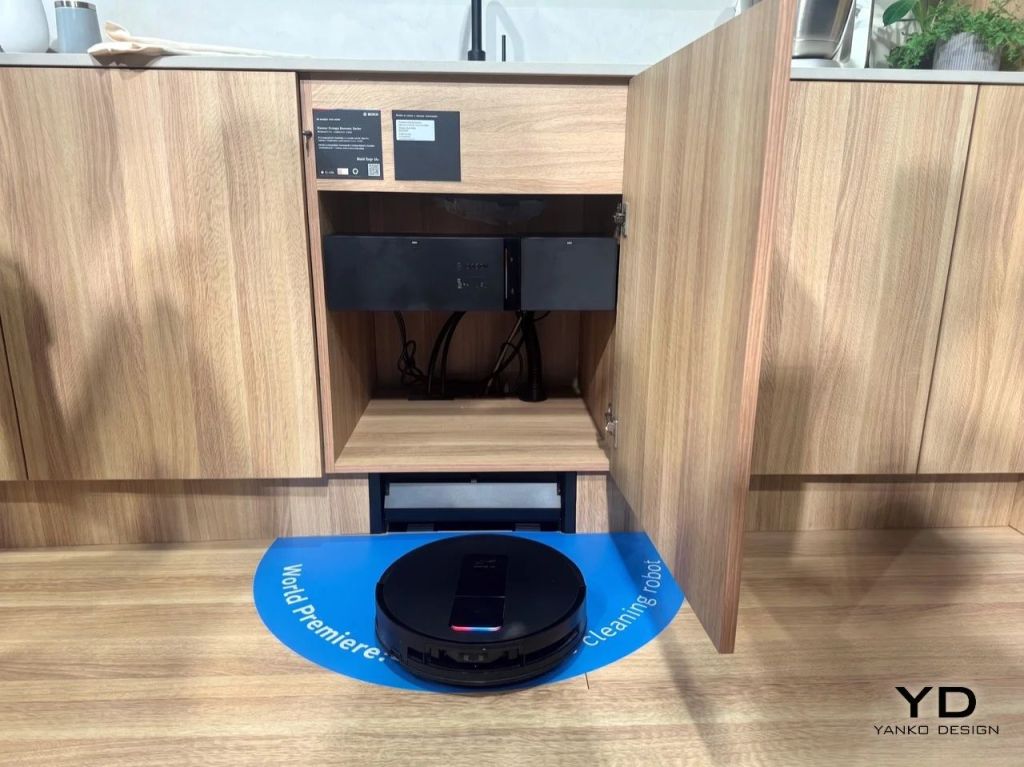
Bosch and ECOVACS Reveal the World’s First Integrated Robot Vacuum System
Bosch and ECOVACS Reveal the World’s First Integrated Robot Vacuum System
For years, ECOVACS has been at the forefront of robot vacuum innovation — from the powerful bagless DEEBOT X11 OmniCyclone to groundbreaking advances in smart navigation, object avoidance, and self-washing mopping systems. Meanwhile, Bosch has spent decades perfecting built-in home appliances, mastering the art of making dishwashers, ovens, and refrigerators vanish seamlessly into cabinetry without sacrificing performance.
Now, these two pioneers have joined forces to create something entirely new: the world’s first robot vacuum and mopping system designed from the ground up as permanent home infrastructure rather than a portable gadget.
ECOVACS brought its cutting-edge robotics expertise to the table — including patented navigation technologies, an impressive 20,000 Pa suction system, and advanced mopping mechanics that wash the pads with 75°C hot water and dry them efficiently with hot air. Bosch, on the other hand, contributed its deep knowledge of integrated appliances: custom plumbing connections that link the service station directly to your home’s water supply and drainage lines, plus a sleek cabinet design that tucks the entire system neatly into a standard sink base while still leaving space for your garbage disposal.
The result is a truly invisible cleaning solution. The robot and its full-service docking station disappear behind kitchen cabinetry, eliminating the clutter of traditional base stations and redefining where a cleaning robot actually “belongs” in the modern home.
The system is set to debut in European stores in spring 2026 and will be controlled via the intuitive Bosch Home Connect app. We caught our first glimpse of the hardware at Milan Design Week, where it stole the show as a bold reimagining of household robotics — elegant, integrated, and effortlessly smart.
This collaboration doesn’t just combine two strong product lines; it creates a new category in white goods. For the first time, floor cleaning becomes a seamless, built-in part of your kitchen design — powerful, hygienic, and completely out of sight
ECOVACS debuts its DEEBOT T30 PRO OMNI
ECOVACS Robotics Co., Ltd., specializing in innovative R&D, is deeply invested in the design and manufacture of service robots, dedicated to leveraging intelligent technology to create a new world for the future. In its latest showcase at the Canton Fair, ECOVACS debuts its DEEBOT T30 PRO OMNI robot vacuum cleaner as proof of their commitment to developing new quality productive forces. This product promises consumers an intelligent cleaning solution thanks to its TruEdge adaptive edge mopping technology and ZeroTangle teeth arrays design
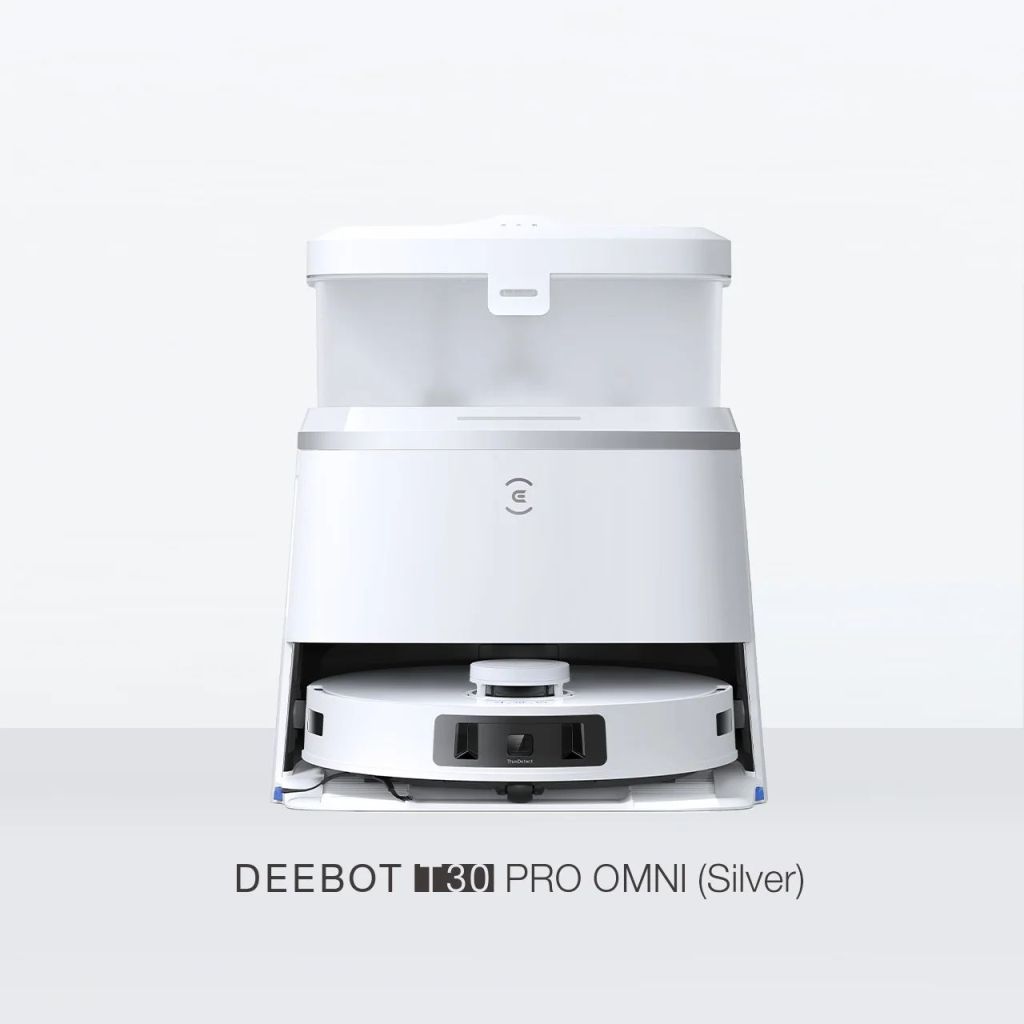
cleaning process, leaving no dead zones and achieving a maximum coverage rate of 100% along the edge lines, while maintaining a mop-to-edge distance as low as 1mm

